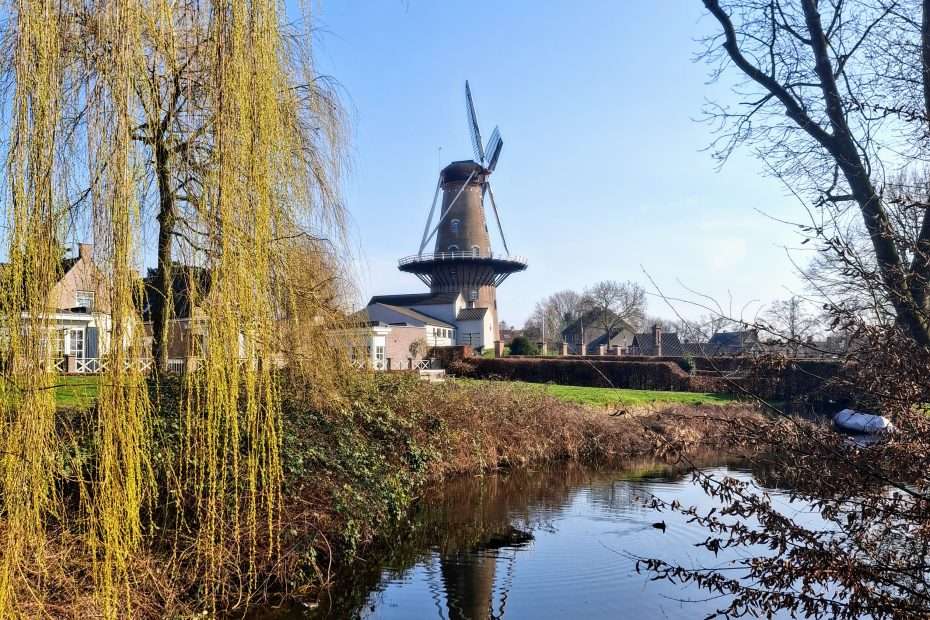
It’s the end of winter, and I wanted to treat myself to a nice little village trip. There are so many new places to discover in the North Brabant region, but life often gets in the way, and I find myself procrastinating. In the past, I would jump at every single opportunity to travel and head out to see a new place. Back then, my work holidays combined with public national holidays were meticulously booked and planned a year in advance. Now that I am retired, I realize I have barely even visited the three big cities nearest to me—Eindhoven, Den Bosch (‘s-Hertogenbosch), and Nijmegen. I suppose I have become comfortable, or perhaps we all just change to some degree as time goes on. However, I still have that travel curiosity burning inside me; it is just a little quieter than it used to be.
The cure for that quiet curiosity turned out to be a simple change in the weather. A beautiful, sunny end-of-winter day deserves to be spent outside doing something more rewarding than just tending to the garden, catching up on house chores, or reading a book. I have been eyeing a few local villages lately, and a visit to Ravenstein was right at the top of my list. It is a lovely, small fortified city nestled along the River Maas in the northeast of North Brabant.
A Protected Enclave: How Ravenstein Carved Its Unique Path

Stepping through the town’s perimeter feels less like crossing a municipal border and more like stepping through a portal into the past. To truly appreciate Ravenstein’s charm, it helps to understand the unique historical bubble it existed in for centuries. In the mid-14th century, the area became the seat of the Land van Ravenstein under the Duchy of Cleves (part of modern-day Germany). Because of these German roots, it remained a fiercely independent Catholic enclave surrounded by the Protestant Dutch Republic. This status allowed its stunning religious architecture to survive intact when nearby churches were being stripped. In the late 18th century, French revolutionary forces conquered the area and subsequently sold it to the Batavian Republic, which eventually paved the way for it to be integrated into the Kingdom of the Netherlands.
Armed with nothing but this rich history and a desire to slow down, I decided to break my oldest travel habit: the itinerary. This time, I deliberately didn’t check anything in advance. I wanted to be surprised and simply see what cafes, restaurants, or interesting historical corners I stumbled upon, making my decisions entirely in the moment.
Because it is a remarkably well-preserved, small fortified city, parking directly inside the old centre can be a bit of a challenge. However, I managed to find a spot just outside the city gates.


- 🚗 If you drive: Look for parking spaces just outside the historic walls, such as the free parking areas near the sports complexes on the Sportlaan or the designated parking spots along the Bleek.
- 🚆 If you use public transport: Ravenstein is incredibly accessible! It has its own dedicated train station, Station Ravenstein, which sits right on the regional line between the major hubs of Nijmegen and ‘s-Hertogenbosch (Den Bosch). The train ride from either city is less than 15 minutes, and from the station, it is just a flat, scenic 10-minute walk straight into the historic core.
With the logistics easily sorted, I set off on foot, letting the town reveal itself to me at its own pace. Ravenstein is rather compact; walking through the old historical centre and tracing its outer perimeter toward the dike takes about two hours—especially if you take it slow like I do, constantly stopping to inspect and appreciate the architecture.
Tracing the Past: The Sights You Can’t Miss

As you meander through the cobblestone streets, you’ll find that history isn’t tucked away in textbooks here—it’s built right into the walls. Here are the points of interest that caught my eye during my visit to Ravenstein.
- Leerlooierij Museum (Tannery Museum): Tucked away on the old city wall, this charming little museum is housed in the last remaining 19th-century tannery building in Ravenstein. It tells the story of the town’s historic leather-tanning and shoe-making industries, complete with an open historical city garden.
- De Nijverheid Korenmolen Windmill: A towering, majestic belt-windmill built in 1857 that still dominates the town skyline. Today, it serves as a wonderful cultural hub housing the Wilskracht Brewery and the Bakhuisje Bakery.
- Pollekespad: A picturesque walking path located right on the water’s edge. Featuring a beautiful wooden bridge and tranquil green surroundings, it is the perfect place to pause and take in the view.
- Philips van Kleefbolwerck: An extraordinary military structure dating back to 1509. Built by the Lord of Ravenstein, it is one of the oldest fortification bulwarks of its kind in the Netherlands and was only rediscovered and excavated in recent years.
- Maasport: The historic water gate that once controlled access into the fortified city directly from the River Maas, serving as a reminder of Ravenstein’s strategic naval past.
- Kasteelse Poort (Castle Gate): A grand, historic stone gateway that represents the last standing remnant of the impressive 14th-century castle that once defended the town before being demolished in the 17th century.
- Raadhuis (Town Hall): A striking, stately building in the heart of the centre that dates back to the 18th century, showcasing classic regional architecture.
- Sint-Luciakerk: Built in the 1740s, this is the only Dutch church built in the German Baroque style. Its construction was made possible because Ravenstein sat safely outside the jurisdiction of the Protestant Dutch Republic at the time.
Time for a Pause: Where to Sip, Snack, and People-Watch

Of course, no slow-travel afternoon is complete without finding a cosy perch to watch the world go by. Ravenstein’s culinary scene is just as inviting as its history.
- Donato’s: Located right inside the historic Raadhuis, this is an absolute gem with a fantastic outdoor terrace. This is exactly where I parked myself with a glass of wine! It is easily the most popular spot in town, especially when the sun is out. They also feature an authentic Italian speciality shop inside, where I couldn’t resist buying some delicious cookies and chocolates to nibble on and bring home.
- De Nijverheid Windmill (Wilskracht Brewery & Bakhuisje): Beyond being a historical landmark, the base of this majestic windmill is a fantastic place to stop for a drink. They have a small, charming outdoor café where you can sit and enjoy an artisan beer brewed right on-site by the stadsbrouwerij, or pick up a freshly baked treat from the traditional wood-fired stone oven in the Bakhuisje.
- Hotel Restaurant Stadsherberg De Keurvorst: Sitting just across from the Raadhuis, this is one of the oldest operational hotels and inns in the region, with roots stretching back to the 16th century. It oozes Old-World Brabant hospitality.
- Mono: A whimsical tea garden cafe paired with a vintage shop. It offers a lovely, peaceful setting, but it operates on a wonderful local tradition—it is only open when the flag outside is flying!
- Op FieZiete: Located just a few minutes’ walk outside the fortified walls. This cosy cafe features an inviting outdoor terrace and runs its own boutique shop selling an eclectic variety of items, ranging from clothes and bags to home decor and unique gifts.
- Brass aan de Maas: A restaurant boasting a beautiful location right on the Maasdijk, overlooking the expansive River Maas. There is a massive outdoor terrace positioned directly on the dike. I capped off my wonderful visit to Ravenstein with a warm coffee here, watching the boats pass by and the water ripple before heading back home.
Putting It All Together: My Perfect Walking Route
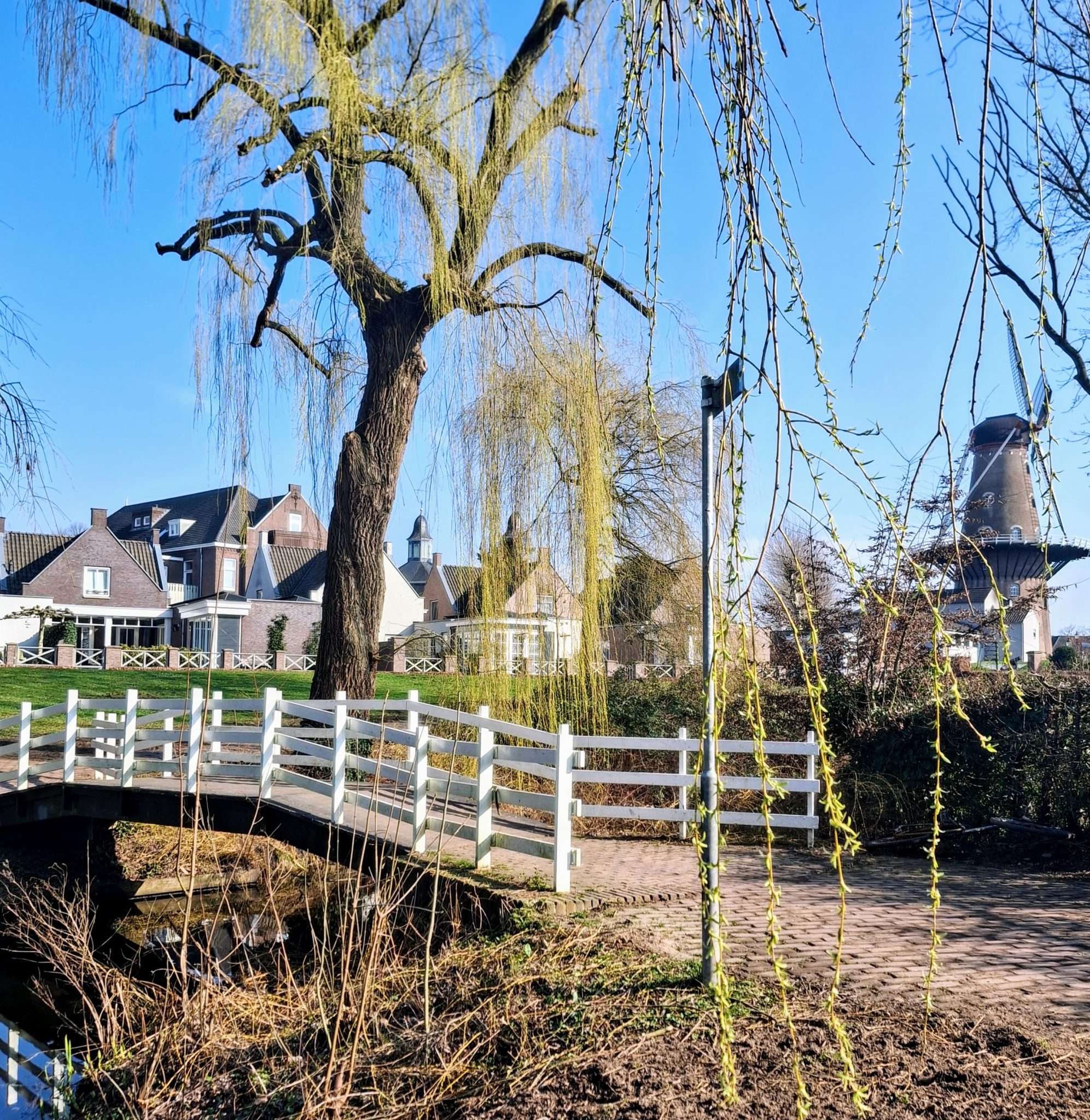


If you are planning your own escape, the best way to weave all of these sights together is to follow the natural curve of the old fortress. I highly suggest exploring the winding alleys of the historical city centre first. Once you’ve soaked in the history, venture outside the perimeter of the fortress walls and walk toward the Pollekespad near the windmill. Cross the scenic wooden bridge and follow the path along the Stationssingel, which offers great panoramic views of the old defenses. From there, slip back into the town via the historic Landpoortstraat, before finally heading down to the Loswal on the Maasdijk to finish your walk alongside the river.
Ravenstein has my reawakened travel vuurtje—my little travel fire—burning a bit brighter now. It is the perfect proof that you don’t need an international flight or a year of planning to experience that genuine sense of discovery. Sometimes, all it takes is a sunny afternoon and an open mind just a short drive from home.
Happy Travels!
With love from Jo
Travel Period: March 2026
Ravenstein, Oss (North Brabant), the Netherlands