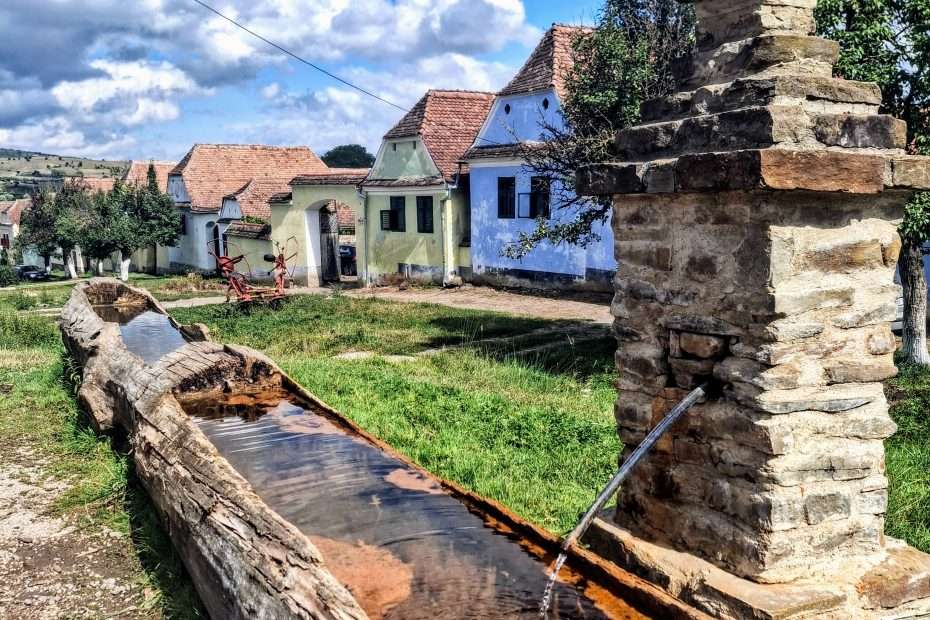
Imagine a place where time ground to a halt centuries ago, where cars are banned, and the village streets belong to wandering horses and horse-drawn carts. Tucked away in the hills of Transylvania lies Viscri, a medieval time capsule complete with pastel-blue and butter cream coloured traditional houses, a fortified fortress, and a culinary scene that turns sacred traditions into delicious modern desserts. If you are road-tripping through Romania, this is the one fairy-tale detour you absolutely cannot afford to skip.
After leaving the Libearty Bear Sanctuary in Zărnești, I headed toward Sighișoara. Along the way, I realised it was the perfect opportunity to make a visit to Viscri for a late lunch. It was right on the same route anyway, and the drive from Zărnești to Viscri took about 1.5 hours (roughly 90 km) through rolling Transylvanian landscapes.
🚗 Arriving in a Village Frozen in Time


I had read that Viscri is a medieval Saxon village completely stuck in olden times, where life seems to freeze. The moment I arrived, I realised the rumours were absolutely true. To protect its historical charm from dust, noise, and traffic, non-residents are strictly prohibited from driving inside the village. You have to leave your car in a designated parking lot just outside the entrance, but it’s only a short, easy walk to get in.
Walking down those streets made of massive cobblestones instantly triggered a wave of nostalgia. It gave me major flashbacks to my trip to Trinidad, Cuba, many years ago. The resemblance was uncanny—the only real difference was the lack of colourfully dressed Cubans dancing the rumba on the street corners!
👑 A Royal Connection

Right at the entrance of the village street, a beautiful blue house on the left side caught my eye. Its doors were wide open, and I couldn’t resist peeking into the courtyard. I didn’t explore any further because you needed a ticket to enter, but I found out later that this was actually the private property of King Charles III, the current reigning monarch of the United Kingdom! King Charles bought the traditional Saxon farmhouse years ago during his visit with the purpose of helping preserve the cultural heritage of the area.
🏰 Exploring the Viscri Fortified Church


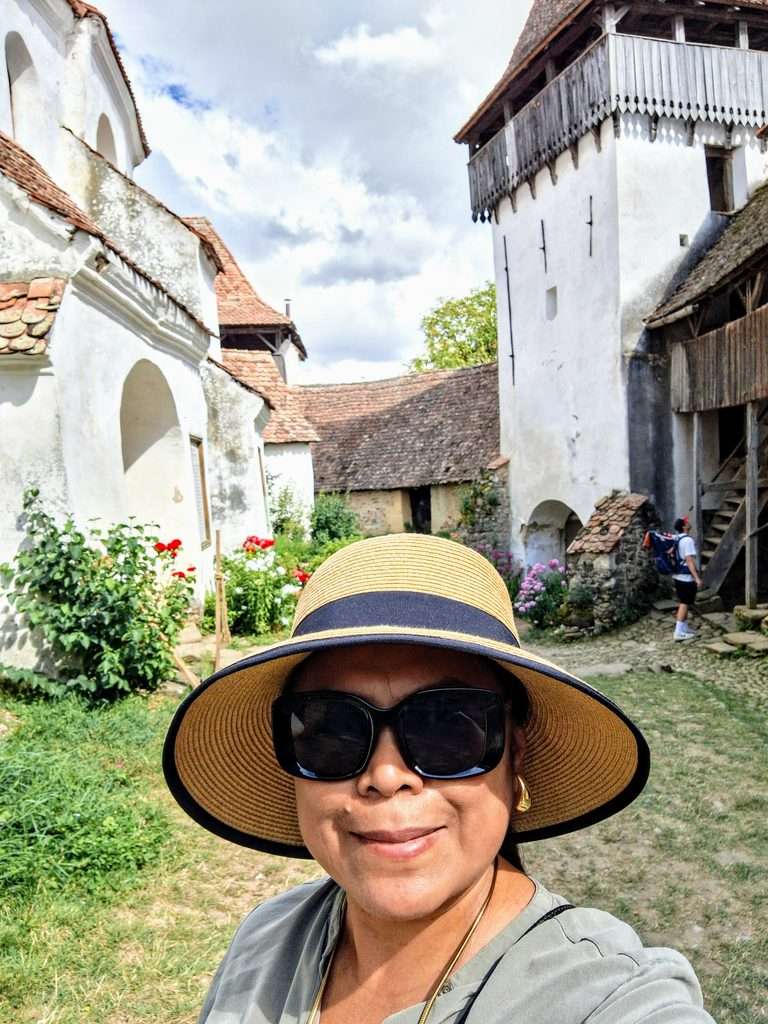


The King’s passion for the area makes perfect sense when you look at the village’s remarkably preserved past. Originally founded by the Szeklers and later settled by Transylvanian Saxons in the 12th century, the village was historically known by its German name, Deutsch-Weißkirch (German White Church).
At its heart lies the Viscri Fortified Church, a spectacular 13th-century Romanesque building. It was later expanded with massive defensive walls and towers in the 15th and 16th centuries to shield the farming community from Ottoman invasions.
The entrance fee is very affordable, costing 20 Lei (around €4) for adults and 10 Lei (€2) for children over 6, students, and seniors.
- April to late October: Open daily from 10:00 AM to 6:00 PM (last admission at 5:30 PM).
- Winter Hours (Late October to March): Open daily from 10:00 AM to 4:00 PM.
Inside, the wooden interior is absolutely stunning. I took my time touring the perimeter walls and climbing the tower, which rewarded me with incredible views over the red roofs and green valley.
🤫 The Secret Magic Behind Closed Gates


Heading back out, the cobblestone streets felt incredibly bare and quiet, save for the occasional tourists drifting through the village, quietly snapping pictures of the architecture. Many houses were left entirely as they were—mysterious, weather-worn, and spartan—while a few others were undergoing careful restorations. Dotted along the sides of the roads, weathered water basins made of stone and cement, some hollowed out logs added a rustic charm—quiet markers of the village’s daily rhythm, serving as communal troughs for the local cows and horses when they wander back from the pastures at dusk.
However, the real magic of Viscri happens behind those closed gates. If you spot a small sign outside a house indicating they sell food or drinks, do yourself a favour and walk right in! Behind the rugged medieval facades lies a world of lovely, welcoming courtyards. Something you should not miss when visiting Viscri!
🍰 Lunch at Viscri 32: Tasting “Funeral Cake”


The first house I tried was a cosy restaurant disguised as a family home with a beautiful and green outdoor terrace, but it was completely full. Luckily, my search led me to Viscri 32: White Barn and Blue House right on the same street. It looked entirely nondescript from the road, but inside was a gorgeous, modern-yet-traditional garden courtyard and a restored Saxon B&B.
I quickly claimed a seat in the garden under a shady tree to escape the blazing August sun. Craving a traditional sweet treat for a late lunch, I spotted something unusual on the menu: a modernised version of “Romanian Colivă” (traditionally known as a funeral cake). This particular twist featured barley porridge cooked with rich village milk, caramelised sugar, and a sweet elder flower jam sourced directly from the local Adept Transylvania Foundation.
I ordered it alongside a hot coffee. I have to admit, the first bite was a bit unusual, but by the second and third bite, the flavours slowly grew on me! My Romanian friend, Bru, later filled me in on the history: colivă is traditionally a sacred dish prepared exclusively for funerals and memorial services. However, because the sweet, spiced grain profile is so delicious, modern Romanian chefs have started reinterpreting it for regular restaurant menus. It’s easily one of the most unique things I’ve learned about Romanian culture so far!
📍 Next Stop: Sighișoara
With a full stomach and quite happy with my visit to Viscri, I hopped back into the rental car and plugged Sighișoara into the navigation. It’s an easy, scenic 45-minute drive (about 45 km) north from Viscri. Not too far away. Many locals swear that Sighișoara is the prettiest town in all of Romania. Oh, that is a mouthful. I can’t wait to see it!
🗺️ Catch Up on the Transylvania 8-Spoke Road Trip Series!
If you missed any of my previous drives, check out the first seven spokes of the journey below before my ultimate trip directory drops very soon:
- Spoke 1: Royal Elegance in Sinaia – Exploring the stunning Peleș Castle
- Spoke 2: The Fortress Vibe of Brașov – Two days soaking in historic charm
- Spoke 3: Day Trips from Brasov – Exploring Rasnov, Bran, and the Libearty Bear Sanctuary
- Spoke 4: Saxon Heritage in Viscri – A step back in time (this post!)
- Spoke 5: Picturesque Sighișoara – A night in the Citadel Sphere
- Spoke 6: Grandeur and Mystery in Sibiu – The historic heart of Transylvania
- Spoke 7: Day Trips from Sibiu – Corvin Castle and Alba Iulia Citadel
- Spoke 8: Bears and Driving Transfagarasan Highway – Epic Transfagarasan highway drive from Sibiu to Bucharest
Happy Travels!
With love from Jo
Travel Period: August 2026
Viscri, Brasov County (Transylvania), Romania