Sighișoara was a key stop on my six-day Transylvanian road trip. My journey had already taken me from the elegant halls of Peleș Castle in Sinaia to the fortress city of Brașov, where I mapped outside trips to the Râșnov, Bran, and the Libearty Bear Sanctuary. On the drive up from Zărnești, I paused for that unforgettable afternoon in the medieval Saxon village of Viscri. The remaining 45-minute drive from there was incredibly pleasant, easing me into a completely different kind of historical grandeur.

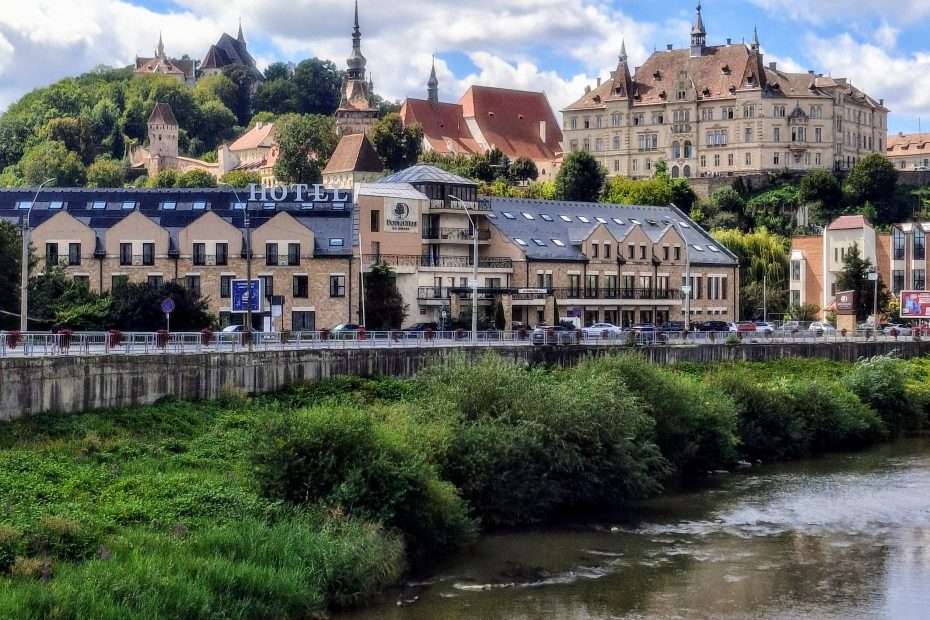
As a designated UNESCO World Heritage site, Sighișoara is legendary as the birthplace of Vlad Tepes (Vlad the Impaler), the historical catalyst for Dracula. Many Romanians confidently swear it is the single most beautiful place in the country—though if you ask around, others will passionately counter-vote for Brașov, Sibiu, or Cluj. Approaching the historical center, my eyes were instantly drawn to a gigantic, beige-and-yellowish neo-Renaissance palace, like a crown, sitting proudly right on the cliff edge of the upper historical citadel. Its sprawling, bright red-tiled roof dominates the skyline, and I later found out it serves as the Sighișoara City Hall. Just a bit further to the left, perched at the absolute highest point of the hill, loomed a massive stone Gothic church with a stark, pointed roof. It looks directly down over the walled town, immediately evoking an intense, old-world medieval atmosphere.
🛡️ A Living Medieval Time Capsule

Looking up at those imposing structures, it was easy to see why this place feels so untouched by time. Founded in the 12th century by Transylvanian Saxons invited by the King of Hungary, Sighișoara developed into one of Europe’s most powerful fortified trading hubs between Central Europe and the Ottoman Empire.
To protect their wealthy town, powerful merchant guilds constructed a massive defensive wall and 14 fortification towers, nine of which still stand today. During my walks through the citadel, these towers stood out as some of the most prominent, beautifully intact medieval relics in the entire town. Each one bears the name of the guild that once defended it—like the Shoemakers’ Tower and the Blacksmiths’ Tower—and they make for incredible photography spots as you wander the cobblestone paths. While I contented myself with admiring and photographing their rugged stone facades from the outside, they would be an absolute dream for further exploration if you are a history buff wanting to dive deeper into the town’s military past.
The only one I actually stepped inside was the iconic Clock Tower, which historically served as the main gatehouse. Famously surviving devastating plagues and a massive 1676 fire, the citadel stands out today as one of the last fully inhabited medieval citadels in the world, beautifully preserving the centuries-old charm that originally brought me to its gates.
🧳 Putting my Samsonite to the Test and Checking in at the Antique Throne Hotel


Because the old town is relatively compact and I mainly wanted to focus on the historic core, I decided to stay for just one night. I booked a room at The Throne – M Museum Hotel specifically because it offered rare, free private parking for guests. The citadel sits on a steep hill entirely paved with cobblestones, meaning it is practically impossible for hotels up top to provide on-site parking. However, The Throne Hotel features a designated, secure lot situated just below the medieval walls, right by the main road entrance to the citadel.
When I checked in, the friendly receptionist told me I could have asked the security guard at the gate to let me drive up into the citadel briefly to drop off my bags before returning the car to the lot. Trying to make things simpler, I opted to walk straight from the car instead—which backfired slightly, as I ended up lugging my heavy luggage up the hilly, uneven cobblestones! Let’s just say my Samsonite luggage underwent the ultimate durability test that day, and it deserves a medal for surviving those medieval streets!
They assigned me one of the last available rooms on the top floor. Housed in a beautifully preserved historic building, the room was quite large and featured a striking marbled stone bathroom. Everything in the hotel completely reeks of antique charm, from the period furniture, paintings and ornate mirrors lining the hallways to the sweeping staircase. They offer a complimentary breakfast served in an atmospheric stone wine cellar located right next to the reception desk. To top it off, the property features a private spa with a hot tub and a sauna; guests get one hour of exclusive, booked access for free, which was the perfect way to unwind.
🚶♂️ Wandering Through History: My Walking Route

Just strolling aimlessly around Sighișoara, catching the golden hour light, and watching the throngs of people pass by is a bucket-list delight in itself. Because I wanted a completely relaxed arrival, I spent my first afternoon simply wandering through the historic core and taking in the atmosphere. Right around the corner from my hotel, on Strada Cositorarilor just by the corner of the Covered Stairway, I discovered a beautifully charming street—perhaps the loveliest street in Sighișoara. This small alley feels like a mini paradise, nestled in a green setting filled with colorful, dainty flowers. Lined with cozy cafe-restaurants featuring outdoor seating, it is an idyllic spot that is incredibly popular for pre-nuptial photo shoots.


After this wonderful stroll, I stopped for a simple dinner at the charming cafe-restaurant tucked away just behind the Covered Stairway (Scara Acoperită) on Strada Scării. Sitting on their elevated terrace provided the perfect vantage point, looking out over the lively cafe terraces and shops lining Strada Școlii all the way down to the main square. It was wonderful to just ‘park’ there, enjoy my meal, and watch the vibrant goings-on of the town from above. Eventually, I made my way to the Citadel Square (Piața Cetății) for a late-evening coffee, enjoying the slow pace of the town as the day wound down.


The next morning, after filling up on the hotel’s breakfast, I set out to properly explore the specific historic landmarks that make this town so legendary:
- Climbing the Clock Tower (Turnul cu Ceas): My morning exploration began at this iconic 14th-century landmark. It houses the Sighișoara History Museum across its vertical floors, and climbing to the top is well worth it. Standing on the open-air balcony rewarded me with panoramic views over the terracotta rooftops of the old town, the lower town, and the rolling green hills beyond. Inside the museum, I also stumbled upon a display featuring an authentic medieval doctor’s bag, complete with a terrifying set of old surgical and childbirth tools. Just looking at those cold metal instruments made my nerves scream. (If you plan to visit, standard entry is 15 RON, around €3, and it is open Tuesday through Sunday).
- The Hotel’s Private Museums: A major perk of staying at The Throne was that the hotelier also owns two spectacular private exhibitions inside the citadel: The Guilds House (Casa Breslelor) and The House of Weapons and Maps. Since guests get to visit both entirely for free, I took the opportunity to pop in. They offered a wonderfully intimate, concise look at the historical trades, antique weaponry, and regional cartography that shaped medieval Transylvania.
- The Covered Stairway & Church on the Hill: Continuing my walk, I made my way to the top of Strada Școlii to find the Covered Stairway (Scara Școlarilor). Built back in 1642 to protect school children from the elements during harsh winters, this atmospheric wooden canopy staircase felt incredibly historic. I climbed all 175 dark steps to reach the very top of the hill, where the Gothic Church on the Hill (Biserica din Deal) sits. Tucked directly behind the church is a beautifully serene, old Saxon cemetery, which offered a peaceful moment of quiet alongside more panoramic viewpoints looking down over the valley.


For the curious, here are medical metal instruments displayed at the Clock Tower museum. From left to right: The surgeon’s case, 18th-19th century – The case for amputation, 18th-19th century – The gynaecology case, also 18th-19th century.


The view from the Church on the Hill:

🌊 Exploring the Lower Town and Riverside

When you are on a fast-paced road trip, attempting to see every single historical marker can quickly become overwhelming. Checking off boxes isn’t a strict must for me; I prefer giving myself permission to just slow down and do absolutely nothing. After making my way back down the hill from the Saxon cemetery, I headed past the Clock Tower to explore Sighișoara’s lively lower town. The main squares down there were a complete contrast to the quiet hill above, packed with vibrant outdoor cafe terraces and bustling local restaurants.

I paused for a morning cappuccino at a charming cafe-restaurant covered by a canopy of multicoloured umbrellas. This area has easily become a popular pictorial spot, with travellers frequently stopping to snap pictures of the whimsical setup. I felt the need to fuel up a bit before continuing my walk, but it was also the perfect excuse to simply sit back and soak in the vibrant lower town ambiance.
Then I wandered further down along Strada 1 Decembrie 1918, watching the daily routines of the residents, and walked all the way to the bridge crossing the Târnava Mare River. The view looking back up toward the massive stone perimeter of the citadel from the riverbank is spectacular. Right across the water sits the stunning, white-domed Romanian Orthodox church officially known as Biserica Sfânta Treime (Holy Trinity Church).


After soaking in the river views, I traced the outer perimeter walls of the fortress on my way back, truly absorbing its sheer grandeur before looping back toward the main citadel gate. On the way, I couldn’t resist picking up a pastry, just a small piece, at one of the busy local bakeries, always eager to taste regional treats and see what they had on offer. I happily ate it on the go as I continued my journey. Sighișoara is definitively a city built for walking, so packing broken-in, sturdy shoes to navigate those steep cobblestones is mandatory.

Before leaving town later that morning, I managed to discover a fantastic local Transylvanian delicacy called scovergi. There is a tiny window bakery attached to a cafe-restaurant right on the corner of the main square, directly next to the Vlad Dracula House (Casa Vlad Dracul). While touring the house itself wasn’t on my personal itinerary, it is considered a must-visit for history enthusiasts; historians have officially verified this very building as the place where the real Vlad the Impaler was born and spent his early childhood years.
Since I had eaten a massive, stuffing breakfast in the hotel’s cellar, and a local pastry earlier, I wanted something small to pair with a late morning coffee, like a mini lunch. Vacation makes it incredibly easy to overindulge with constant snacking, so even though I burn a ton of calories walking these hills, I try to practice portion mindfulness. The scovergi was perfect: a simple, crispy fried donut dough dusted lightly with powdered sugar. It was delightfully light, not too sweet, and paired beautifully with a strong coffee.
More pictures of beautiful Sighisoara:


📍 Next Stop: Sibiu
With my luggage in tow, I gave it another spin on the cobble stone roads of Sighisoara. The Sighisoara road trip leg is now behind and on to the next destination. It will be a 1.5 hour drive is traffic goes gentle with me. I am very much looking forward to visiting Sibiu, the heart of the Transylvania county.
Logistics & Alternatives (Travelling Without a Car)
For travellers exploring Transylvania without renting a car, Sighișoara remains incredibly accessible via public transport which will help you immerse in local life (if this is a goal) or organised day trips:
- By Train from Brașov: Direct trains operated by the Romanian Railways (CFR) run regularly throughout the day. The regional trains take roughly 4 hours, while the faster InterRegio trains complete the scenic trip in about 3.5 hours.
- By Bus from Brașov: If you prefer a faster journey on wheels, coaches like FlixBus operate daily routes between the two cities. The trip is highly efficient, taking only around 1 hour and 50 minutes.
- By Train from Bucharest: Direct trains depart from Bucharest Nord Station (București Nord). The journey cuts straight through the Carpathian Mountains and takes approximately 6 hours to 6.5 hours, making it a long but visually rewarding ride.
- Guided Tour Options: If you want to skip navigating timetables altogether, there are numerous organised day tours departing from Brașov or Bucharest. These excursions are a great hassle-free alternative, typically covering the Sighișoara Citadel alongside nearby historical gems like the Viscri Fortified Church and the Rupea Fortress all in a single day.
🗺️ Catch Up on the Transylvania 8-Spoke Road Trip Series!
If you missed any of my previous drives, check out the first seven spokes of the journey below before my ultimate trip directory drops very soon:
- Spoke 1: Royal Elegance in Sinaia – Exploring the stunning Peleș Castle
- Spoke 2: The Fortress Vibe of Brașov – Two days soaking in historic charm
- Spoke 3: Day Trips from Brasov – Exploring Rasnov, Bran, and the Libearty Bear Sanctuary
- Spoke 4: Saxon Heritage in Viscri – A step back in time
- Spoke 5: Picturesque Sighișoara – A night in the Citadel Sphere (this post!)
- Spoke 6: Grandeur and Mystery in Sibiu – The historic heart of Transylvania
- Spoke 7: Day Trips from Sibiu – Corvin Castle and Alba Iulia Citadel
- Spoke 8: Bears and Driving Transfagarasan Highway – Epic Transfagarasan highway drive from Sibiu to Bucharest
Happy Travels!
With love from Jo
Travel Period: August 2026
Sighisoara, Mures County (Transylvania), Romania