China is a multifaceted country that is changing through the times and growing its economy and much more at breakneck speed. It is unbelievable to see the transformation of a once communist country into one of the (if not the) largest economies in the whole wide world.
As of 2017, there are 115 Chinese companies in the Global Fortune 500 list. 3 of the top 5 are Chinese companies. 10 years ago was a different story. Having been to China twice now, mainland China that is, and not counting Hong Kong, Macau, and Taiwan which I have been to as well, I can only say that the country is truly making history. Proving to the world as it charges through to an incredible phase of technological and economic advancement.
I would recommend to travellers who want to visit the country to visit now because many traditional places of interest are slowly going down the path of extinction. They are being taken down or camouflaged with modernisation. Preservation is only for what the government deemed as highly historical and of cultural value to the country.
Old wet markets, traditional shop houses, and the daily street hawking scenes are sadly slowly disappearing in most Chinese city streets. That’s what I have learned and noticed during my last visit to Shanghai.
But before I go into details of this amazing visit to Shanghai, let me backtrack to my departure.

The trip is part of 2 other trips to New Zealand and Hong Kong. I am visiting my sister who now lives in Auckland, New Zealand. Unfortunately, because of the distance, there are no direct flights from Amsterdam to Auckland. On the way back, I have to also meet my parents somewhere halfway and we chose Hong Kong as it is not a long flight for them to tackle.
Of all the cities in China (there was no doubt though that I will be passing in China) I picked Shanghai as my layover city for 4 days because it offered me the best schedule. I will not deny the fact that I have entertained Beijing, Xi’an, and Chengdu, but Shanghai came out with the best arrival time from Amsterdam and departure to Auckland. I couldn’t really say no to Shanghai.
It does help that Shanghai has one of the best airport hubs in Asia to fly to and fly out from.

China is investing a lot right now in technology and is surely out there to impress the world, especially its visitors.
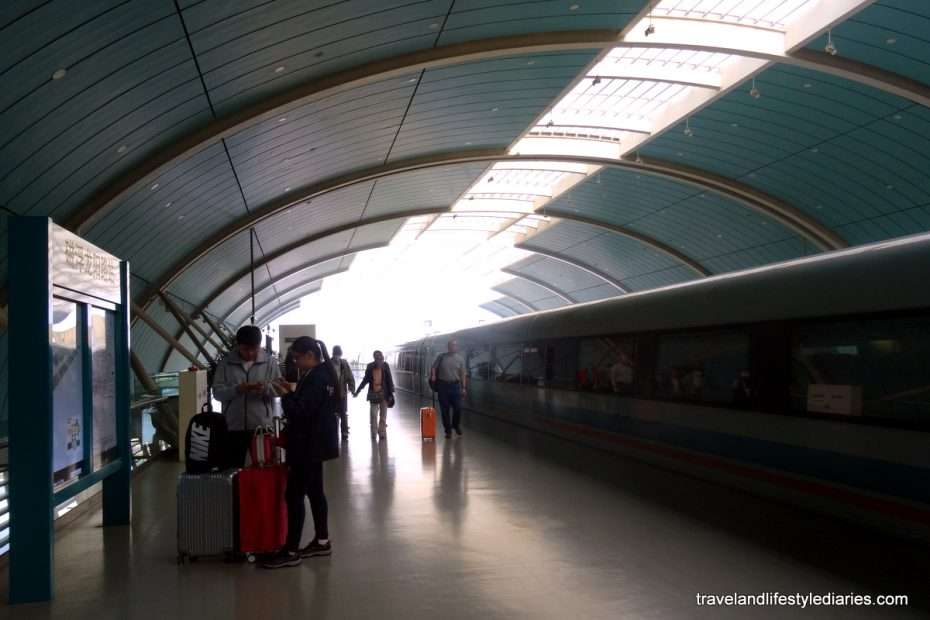
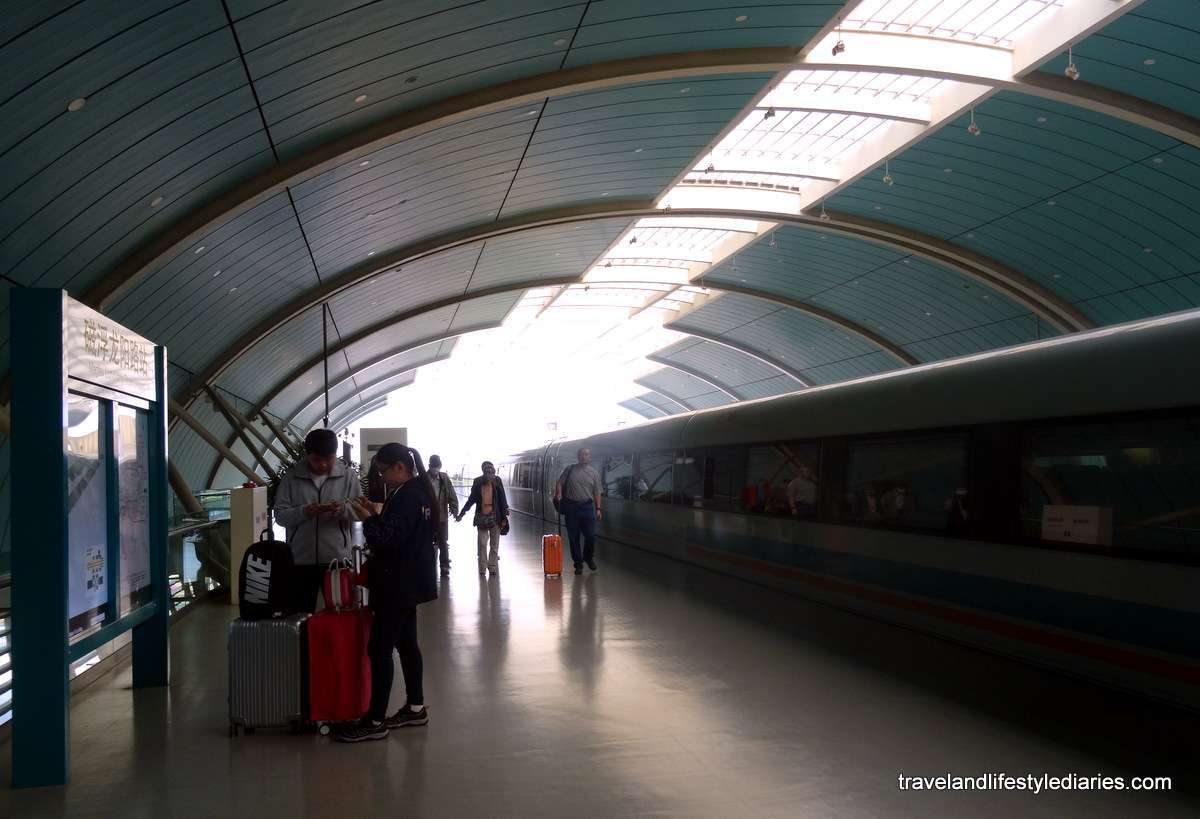
One of its high-tech showcases is the Shanghai Maglev Train, a magnetic levitation train that was built by a joint venture of Siemens and ThyssenKrupp from Germany for the Chinese government. It is the fastest commercial high-speed electric train in the world and can reach a speed of 431 km/h. During the test drive in 2004, it was registered to have reached the speed of 500 km/h
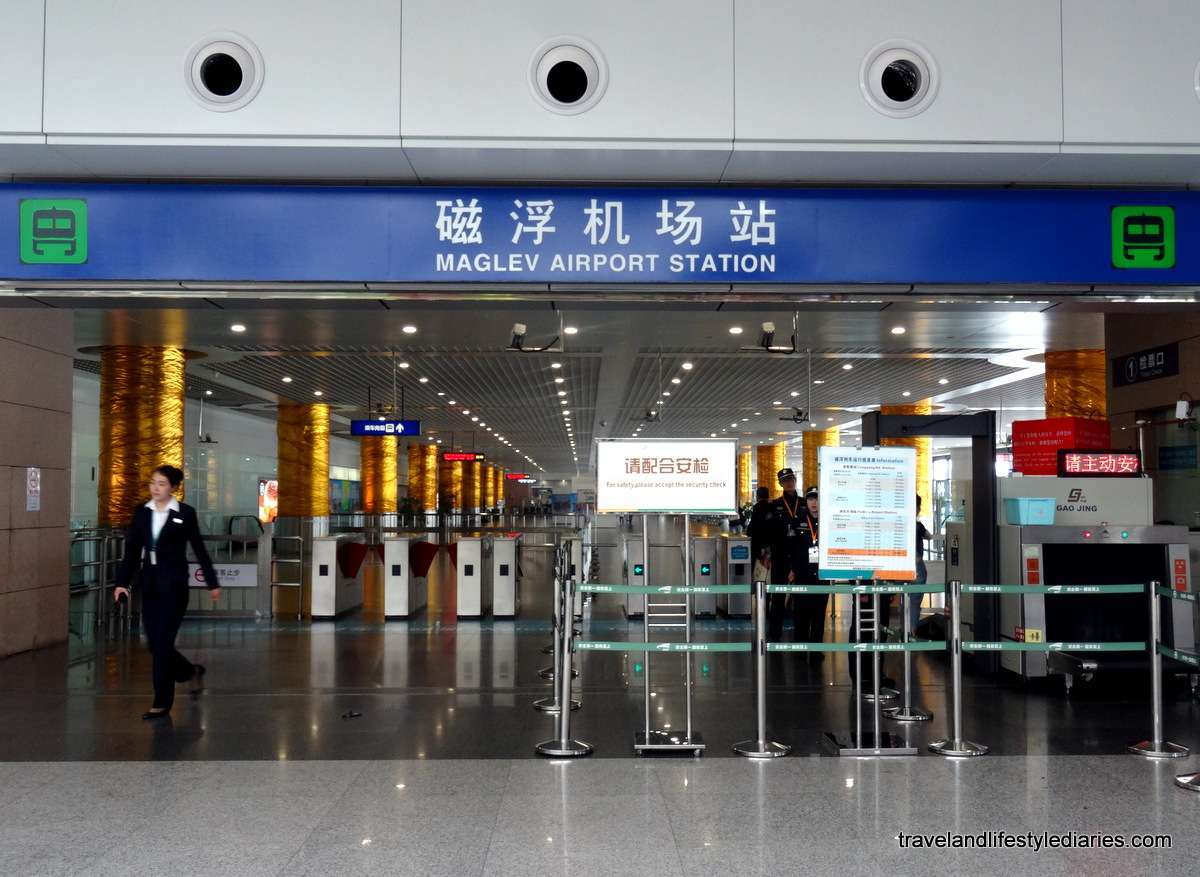
Of course, I cannot let the opportunity pass, so instead of taking the cab to Shanghai city center, I bought a (return) Maglev train ticket. #yolo
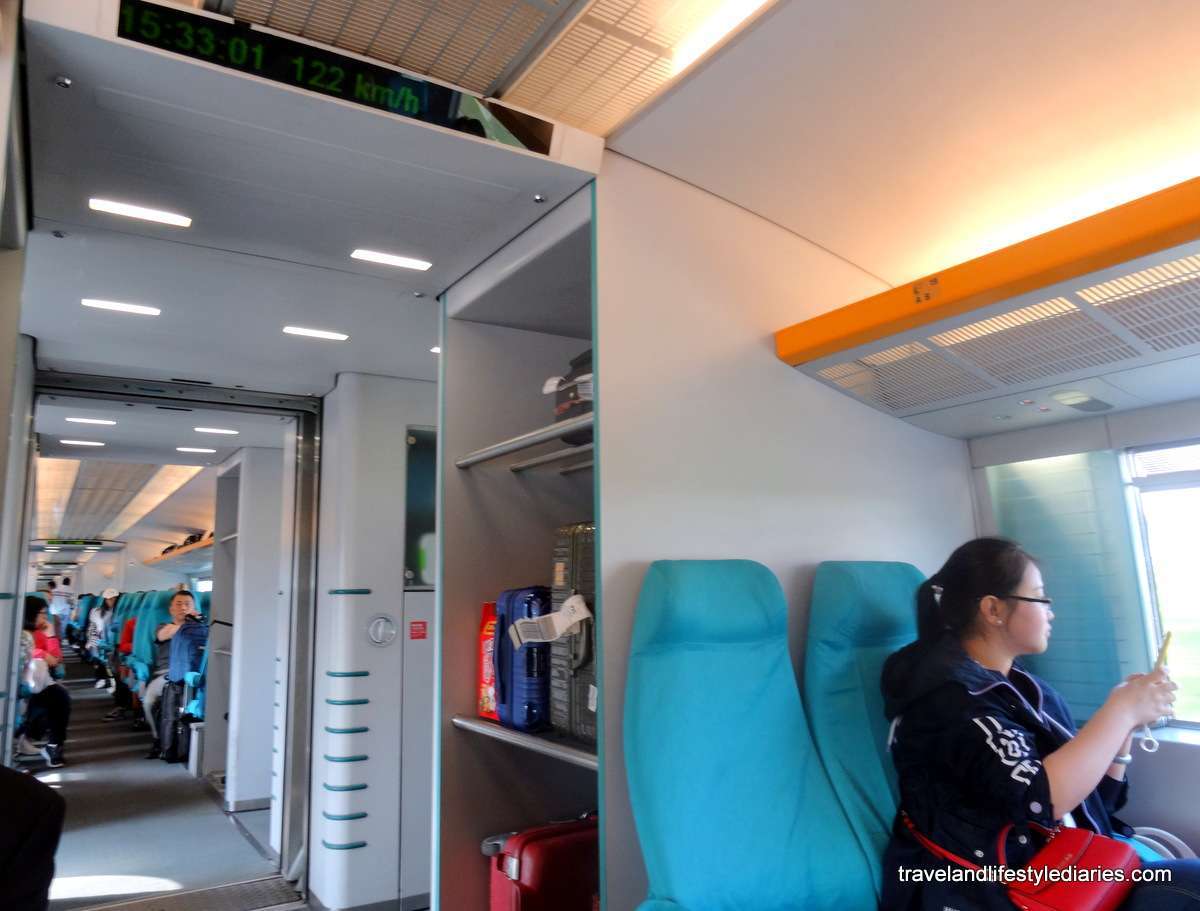
The ride was quite a thrill actually. It was my first time to take a Chinese high-speed train in China. Living in Europe, I am no stranger to modern high-speed trains. I have taken bi-weekly commutes to Germany from the Netherlands with the 300 km/h ICE high-speed trains in my previous work. The Dutch NS trains are very comfortable. So I was looking forward to this new Maglev experience.
As we started to slowly move, I settled in the train’s cabin looking at the speed indicator on the top.
When the speed started to ascend, I could feel the train going fast, but nothing really different from the trains in Europe, or so I initially thought. But then it went faster, and faster until it reached 300 km/h. It didn’t just stop there, the speed further climbed up to 400 km/h with the train carriage quivering a bit and then it reached a maximum speed of 431 km/h! Wow!

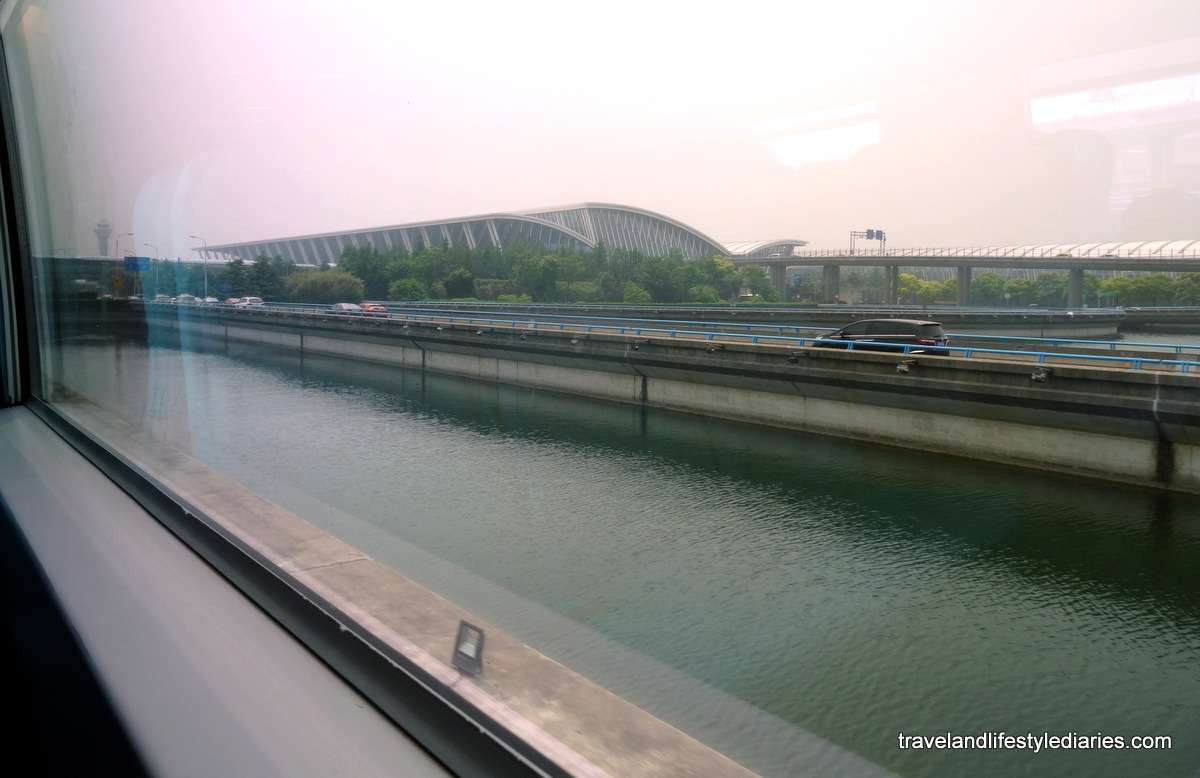
When the train hit the 300 km/h speed mark, I could really feel the velocity working in my body. It was so fast that as a passenger you will really feel how agile and light the train was. It shoots through the rail network like a super bullet and when it bends a curve, you can see the highways and the cars down below through the windows like you are looking from the top of your seat in a moving (quite surreal though) oval football stadium. For a moment there, I felt that time froze and held my breath.
The fact that we were going at 431 km/h gave me the adrenalin rush but also gave me snippets of vulnerability that anything can go wrong. I mean, with just a little slip, we could be derailed and sent flying across Shanghai City towards the Yangtze River. I can’t help but think about it!
Luckily, the whole trip is just under 10 minutes, well 8-minutes to be exact, so I don’t have to hold my breath for that long.
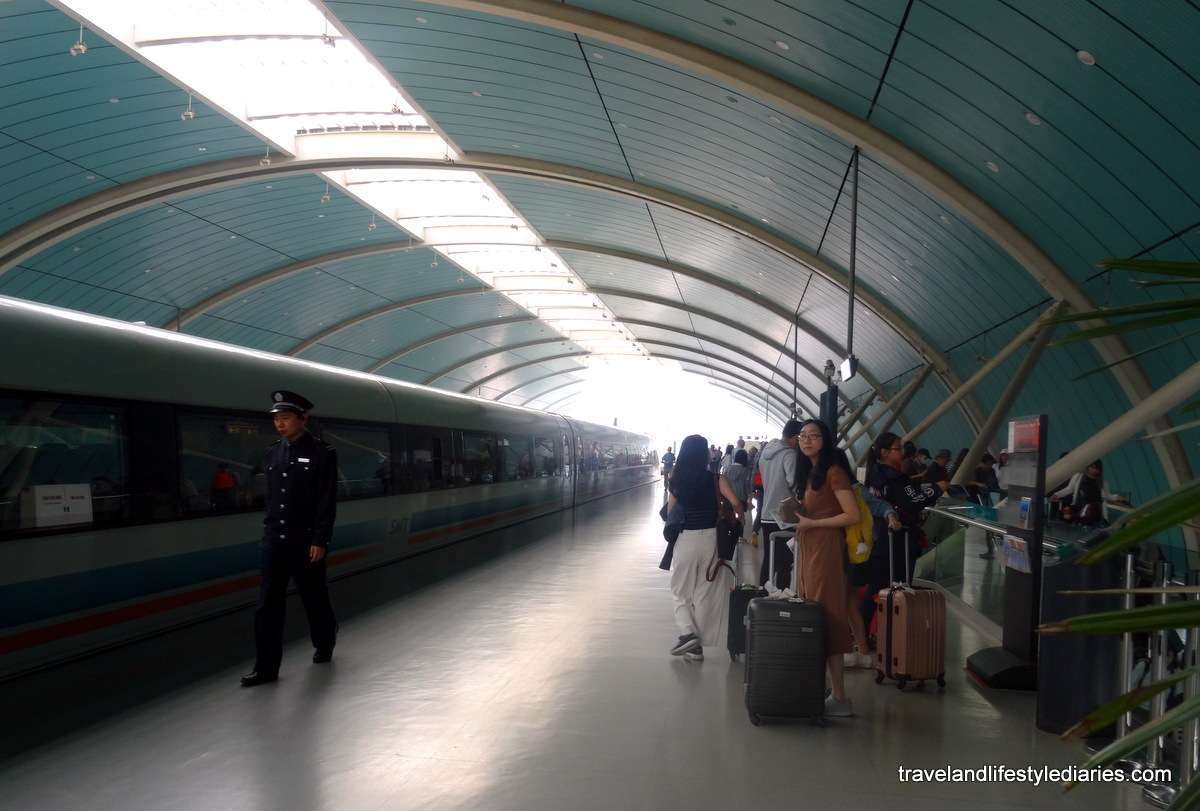
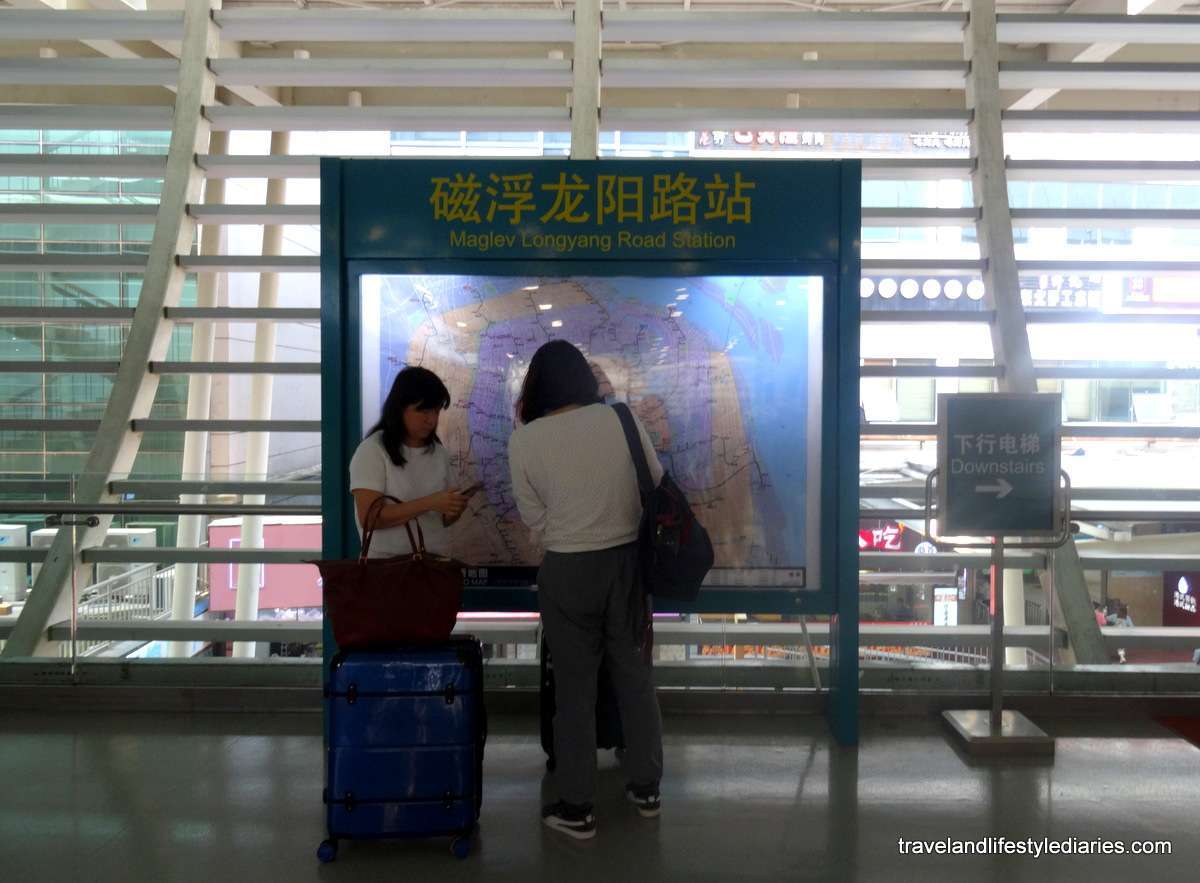
The train operates from Shanghai Pudong International Airport to Longyang Road Station where you can change to the Shanghai Metro that goes to the city center. Shanghai can get pretty traffic so the Maglev train is the best there is to cut down travelling time to and fro the airport. From the airport to Longyang is 30.5 kilometers equivalent to an 8-minute ride, which could have easily taken 35-45 minutes with a cab ride.
TIP: Buy the Maglev return ticket (at the airport or at Longyang Road Station) because it is cheaper.
From Longyang Road Station I changed to the Shanghai Metro which is located beside it to get to the city. I bought the metro card in Longyang and then had to navigate through the metro network to get to my hotel in Zhabei. It wasn’t that easy when you are travelling with a 23-kilo suitcase on traditional wheels (not roll-on wheels) and a 7-kilo bag. Shanghai Metro is massive and transferring to another metro line will take you a long journey underground which involves steering through a throng of human traffic, staircases (some escalators), and very little lifts.
I didn’t want to take the taxi at Longyang to my hotel because I have read of taxi scams online. No way am I going to fall for this trap.
Anyway, the transfer from the Maglev to the Shanghai Metro was an experience. Quite happy though that when I stepped out of the Shanghai Railway Metro Station stop, I quickly saw the logo of the hotel just across the road.

On my return to the airport, I took the comfortable and fastest option. I grabbed a cab from the hotel to Longyang Road Station (approximately 30 minutes), and then took the fast Maglev train (8-minutes) which the ticket I earlier bought. Just add 5+ minutes for logistics and waiting.
This is the quickest and easiest way to get to Shanghai Pudong International Airport.
The only downside to the Maglev train experience is the cabin interior of its economy section which I find a bit on the shabby side. It does not look like it is very well maintained.
Compared to the modern and new European trains, and I am talking here about the German, Dutch, Italian, French and Spanish intercity trains that I have travelled with in the past, the Maglev is fitted with somewhat poor quality upholstery and interior cabin finishing. It was a bit disappointing. Economy class in European trains are of a high standard quality that it would be a waste of money to buy first class tickets. It is very little, in fact, an almost negligible difference between economy and first class.
I am sure the Chinese could do better and upgrade the quality of its economy class to match the high expectations and image of Maglev as the fastest train in the world.
Travel Period: April 2018
Destination: Shanghai, China
Keep in touch and follow me on Facebook: Travel & Lifestyle Diaries by Dutched Pinay Travels
Happy Travels! Enjoy Life =)
All pictures were taken by a point and shoot pocket camera or a smartphone.