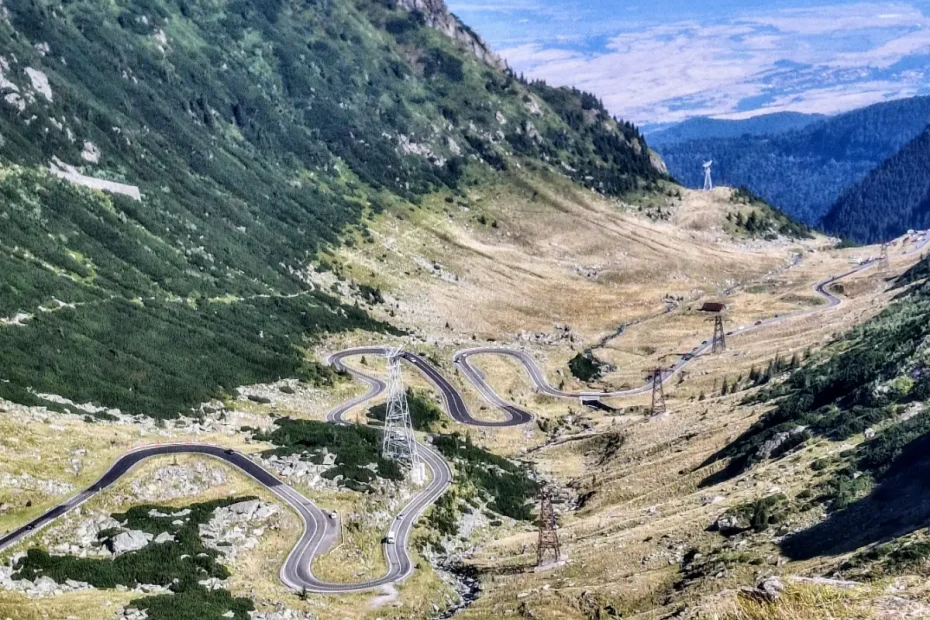
The Ultimate Bucket-List Drive: Romania’s Legendary Transfagarasan Highway
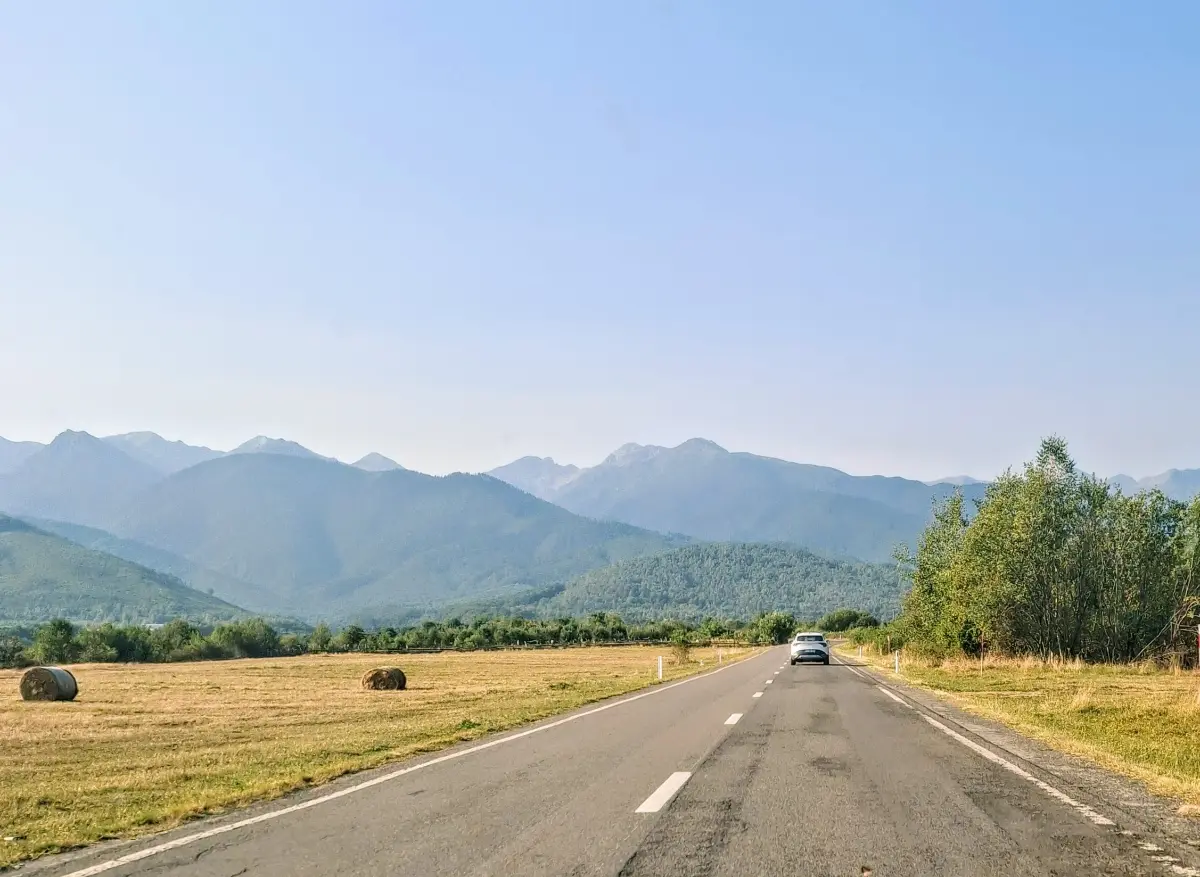
As the final stop on my 8-part regional road trip series, today we are tackling the ultimate bucket-list drive: Driving Romania’s legendary Transfagarasan Highway.
After days of soaking in the slow rhythm of Transylvania’s citadels, it was time to test my nerves on what Jeremy Clarkson famously dubbed “the best road in the world.” But navigating 90 kilometers of dramatic mountain passes requires a lot more than just showing up. From unexpected traffic bottlenecks to strict daytime gate closures, here is what you need to know before you turn the ignition.
📊 Transfăgărășan Highway: Fast Facts & Logistics
- Route: Connects Cârțișoara in the north to Curtea de Argeș in the south (DN7C).
- Total Length: 90 kilometers (56 miles) of dramatic mountain passes and hairpin turns.
- Peak Elevation: Reaches 2,042 meters (6,699 feet) near Bâlea Lake.
- Season: Typically open only from late June to late October due to heavy alpine snow.
- Hours: Daytime driving hours strictly enforced between 07:00 and 21:00.
- Military Origins: Built between 1970 and 1974 under communist leader Nicolae Ceaușescu as a strategic military route across the Carpathian Mountains.
The Reality of the Clock: Planning Your Route
From Sibiu to Bucharest, it takes approximately 8 hours of pure driving time. However, once you factor in sightseeing stops, lunch, and inevitable mountain traffic, you need to budget at least 10 to 12 hours. To enjoy the scenic lookouts and take comfortable breaks without rushing, a departure between 7:00 AM and 8:00 AM is highly recommended to reach Bucharest before darkness sets in.
Checking out of my Mystery Box apartment in Sibiu was completely seamless. I simply left the key in the lockbox by the door and sent a quick confirmation message through the Booking app to let the host know I had departed.
The absolute first priority after starting the car was pulling into a petrol station to fill the tank completely. There are no petrol stations on the Transfagarasan Highway. Fueling up beforehand is a non-negotiable safety step before heading into the mountains. From the station, I drove toward Cârțișoara, the picturesque northern gateway village sitting right at the foot of the Făgăraș Mountains. Within half an hour, I reached the first official landmark.
Stop 1: Bâlea Waterfall (Cascada Bâlea)
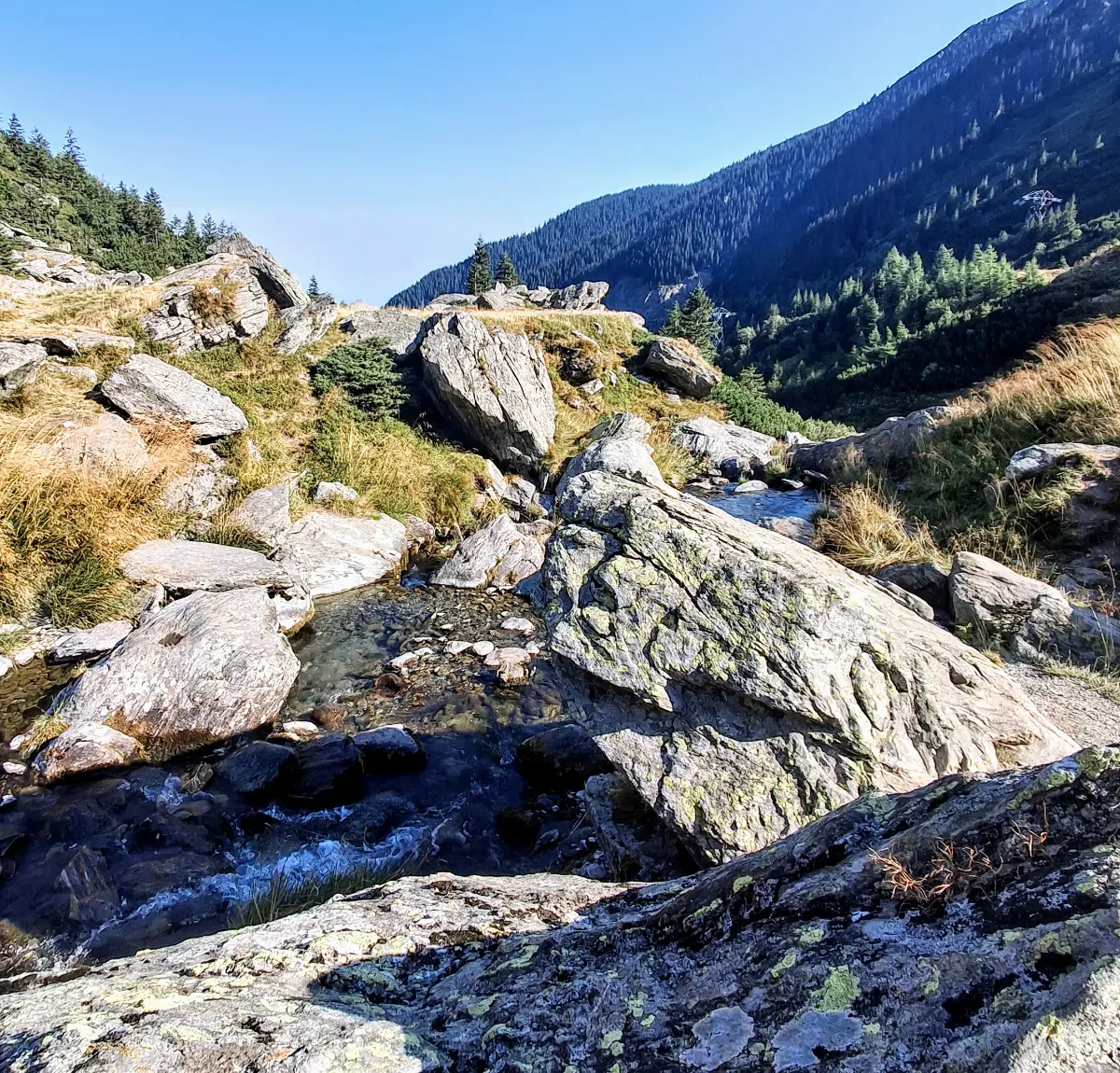
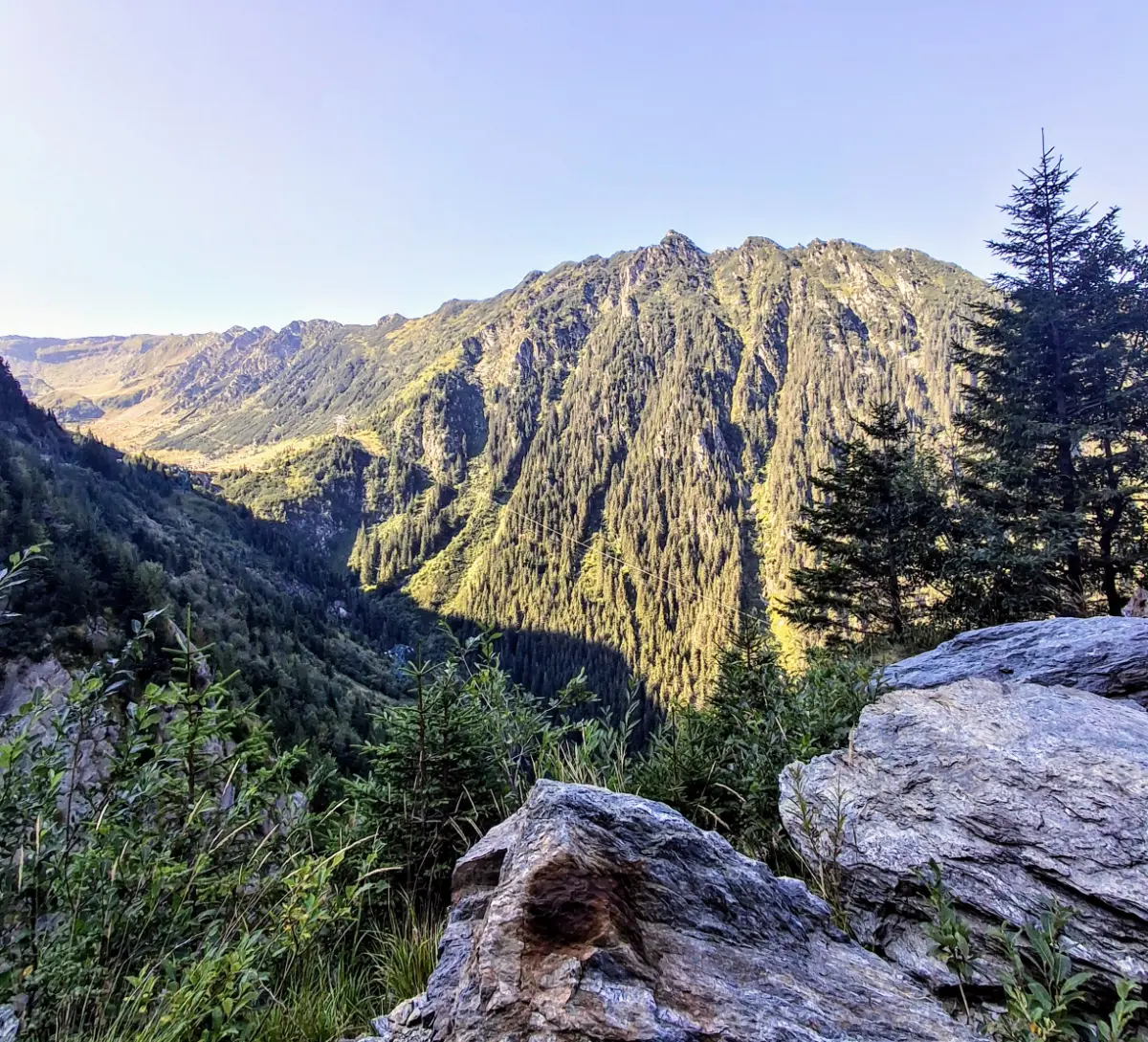
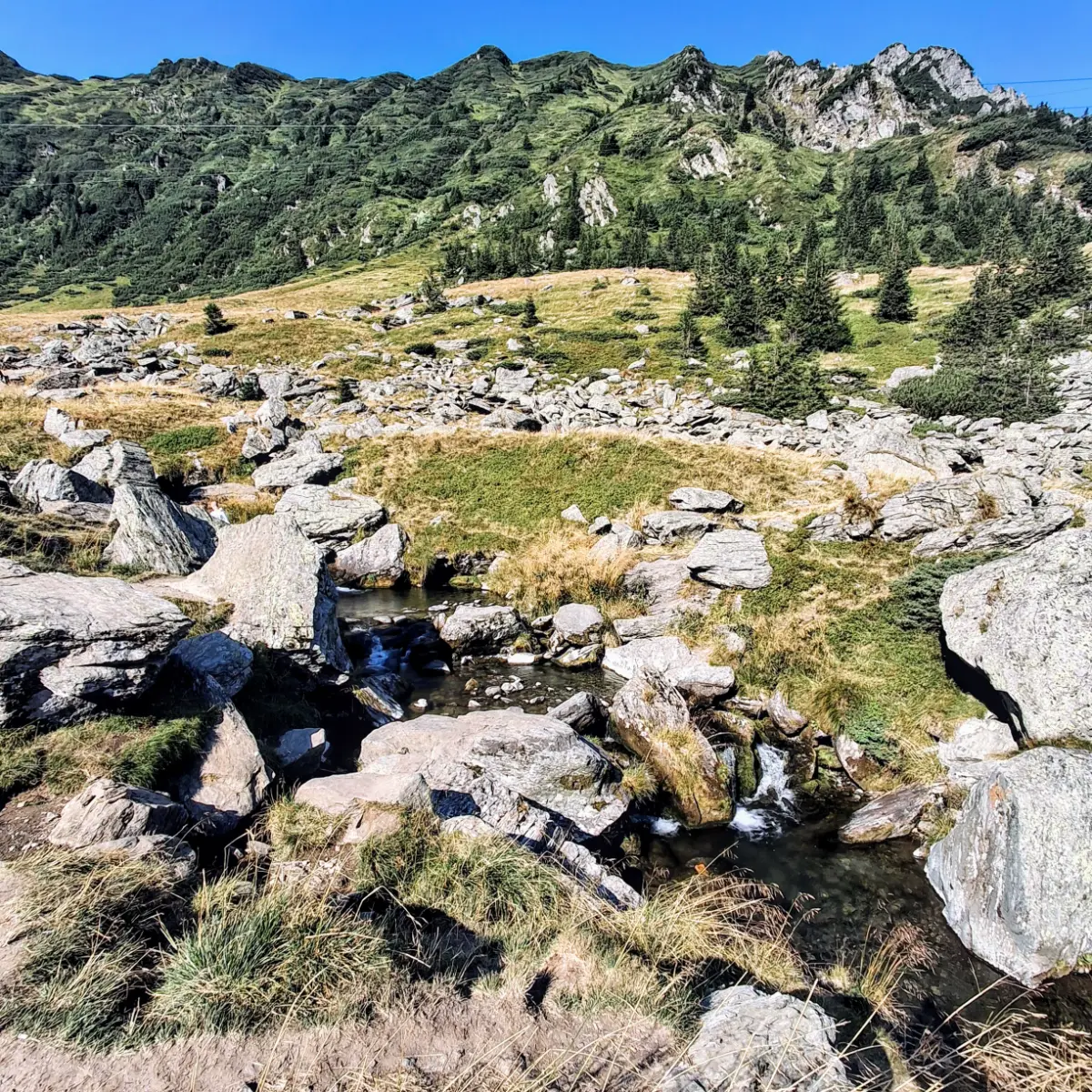
Bâlea Waterfall is a dramatic, 60-meter-tall stepped waterfall accessible via a short hike from the main road or viewed from the red cable car swinging overhead. Because it was early in the morning, I wasn’t quite in the mood for a trek. The trail directions from the road weren’t particularly clear either, which did not help kickstart an adventurous urge to hike down into the gorge.
Instead, I used the stop as a quick rest break. I stretched my legs, watched the rushing stream flowing down from the falls, and caught a glimpse of the cable car ascending into the mist. I was also keeping a close eye on the clock. It was still early, but having only covered 30 minutes of a 10-plus hour journey, I wanted to gain some real distance before committing to a lengthy stop.
📊 Bâlea Waterfall: Fast Facts
- Type: The largest multi-step alpine waterfall in Romania.
- Access Point: Serves as the lower base station for the Bâlea Cable Car.
- Hike Duration: A round-trip trek from the road to the base of the falls takes roughly 45 to 60 minutes over uneven terrain.
Stop 2: The Winding Valley Pass
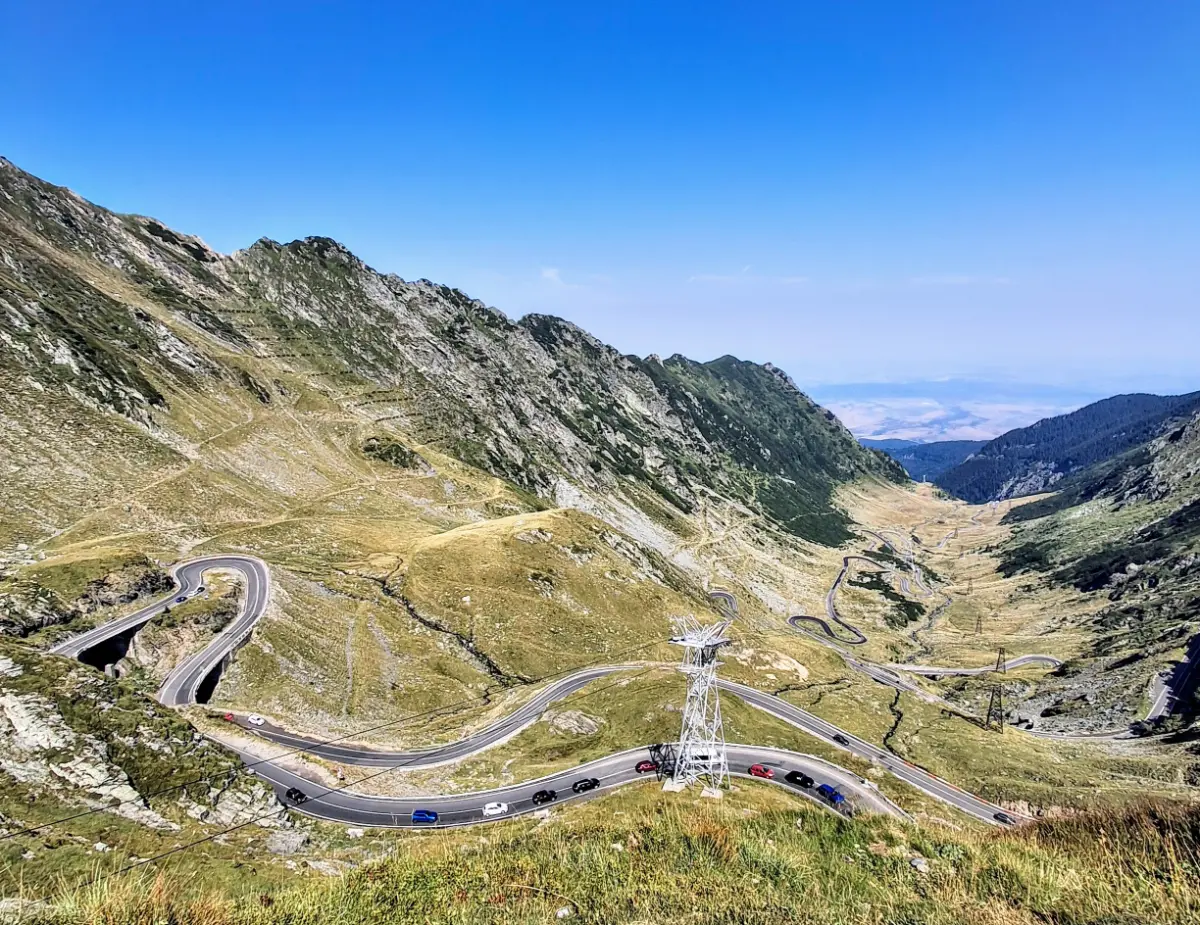
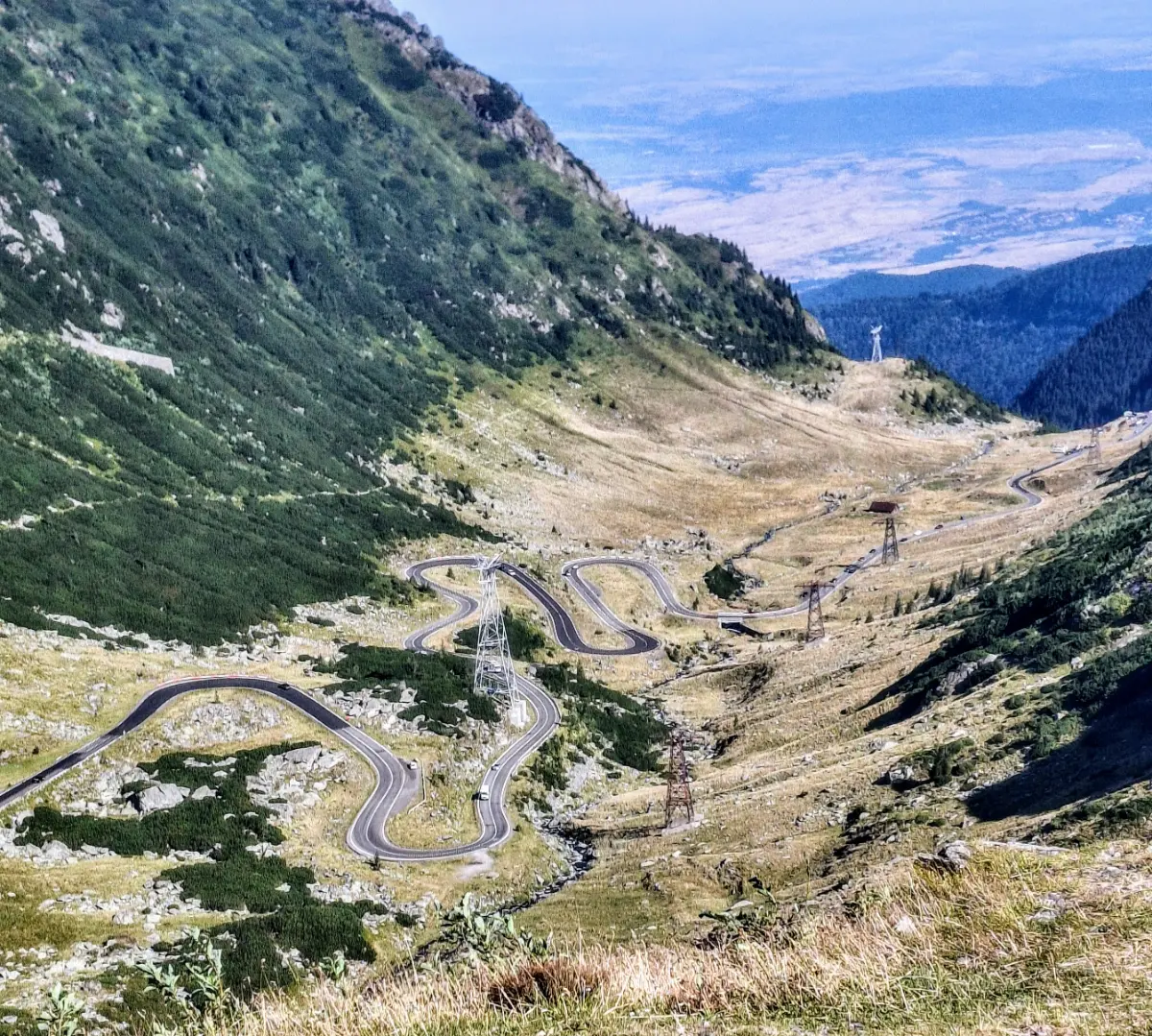
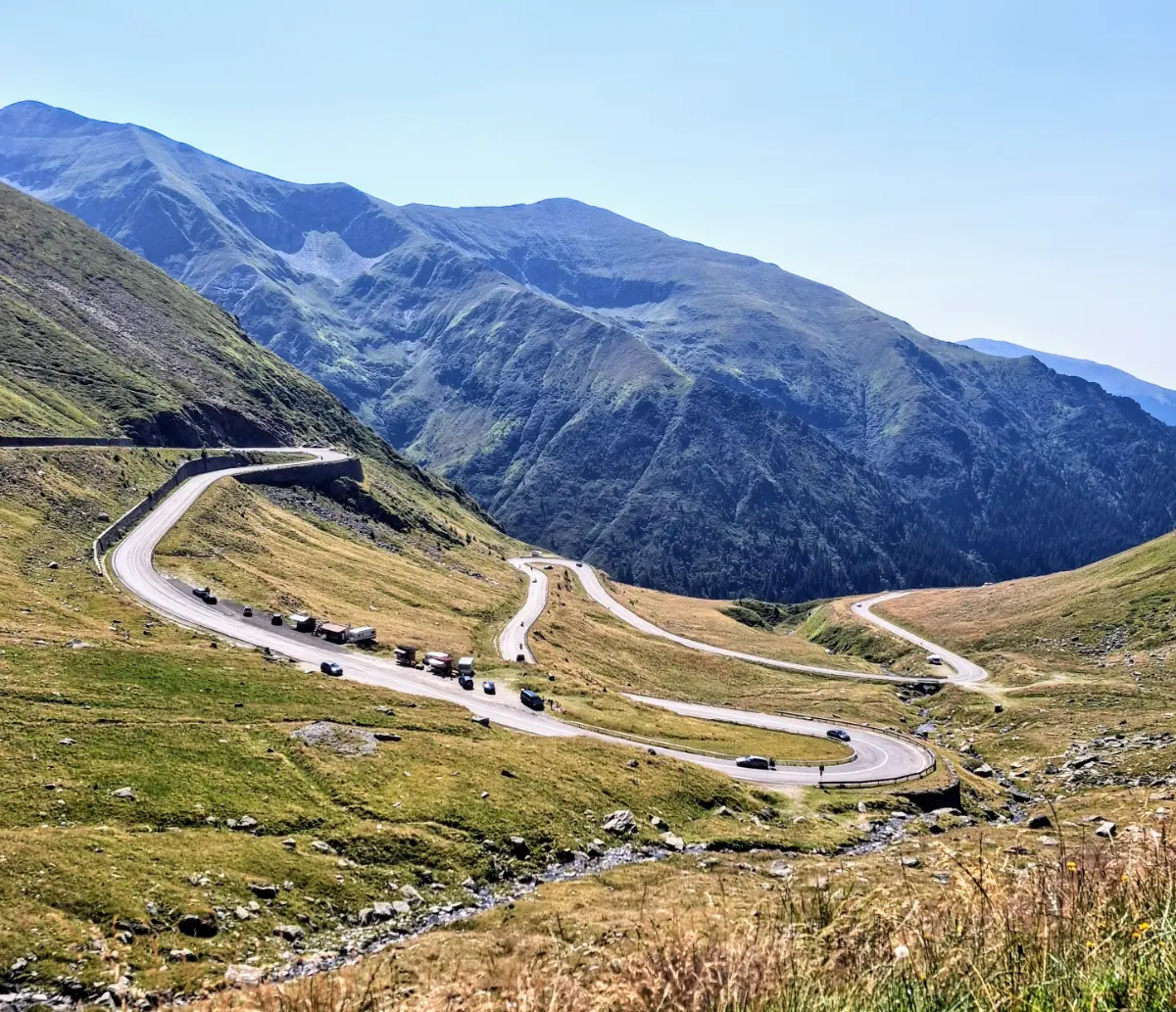
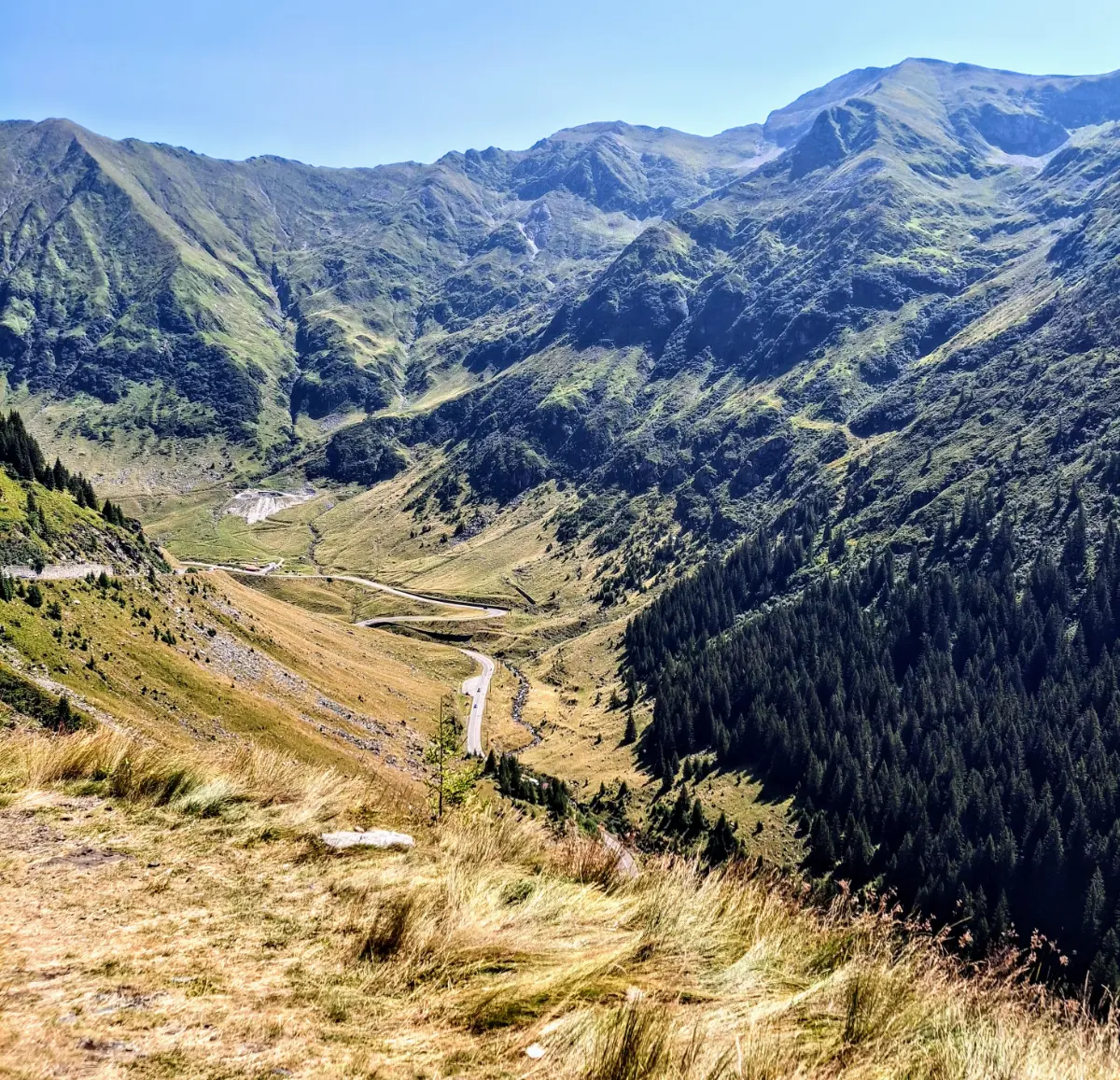
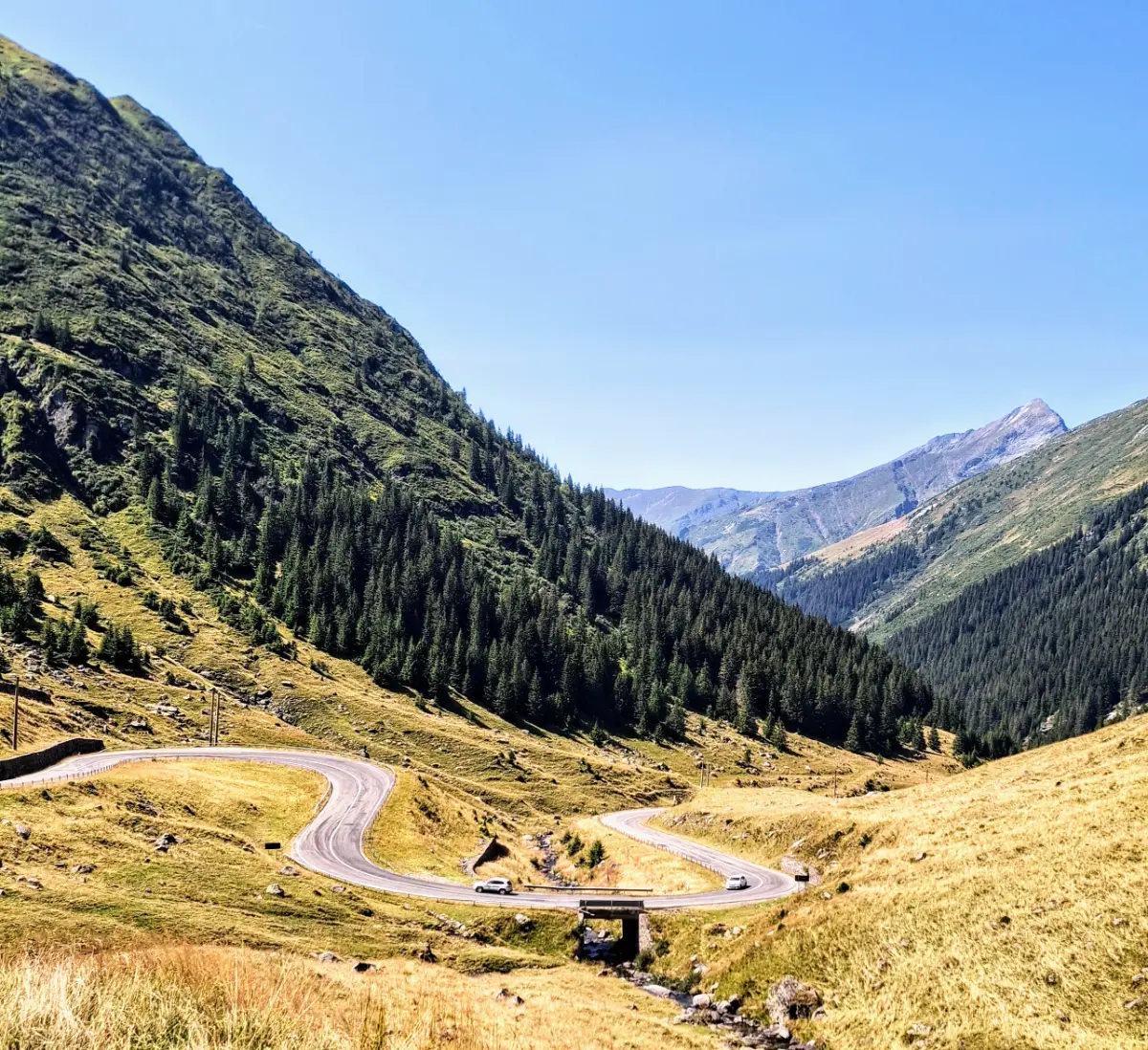
Leaving Bâlea Waterfall behind, the road immediately began to coil into tight, sweeping switchbacks that got the adrenaline pumping. This specific stretch between the waterfall and Bâlea Lake offers the most dramatic, iconic panorama of the Transfagarasan Highway—the exact view emblazoned on almost every postcard and travel article about Romania.
I noticed a distinct increase in traffic along this section. Because the valley is so intensely photogenic, there are dozens of small, improvised viewing turnouts where you can pull over to snap photos. I took advantage of a few spots myself. However, I later realized that an even better vantage point awaits at Bâlea Lake if you make the short climb up the ridge overlooking the valley.
As I drew closer to the lake, traffic ground to a slow crawl. The bottleneck was caused entirely by cars queuing up for parking spaces and drivers maneuvering into tight spots along the narrow road.
Stop 3: Bâlea Lake (Lacul Bâlea)
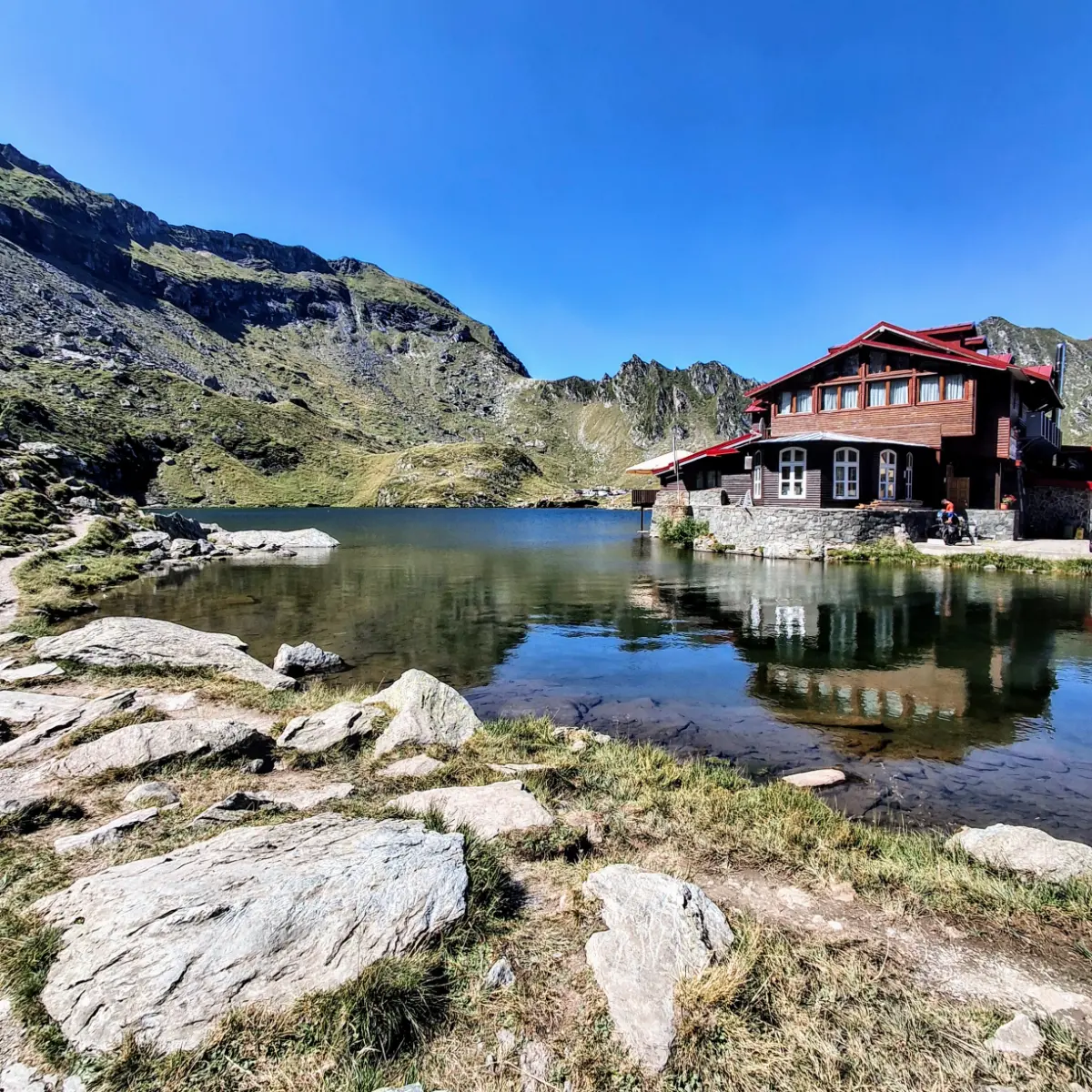
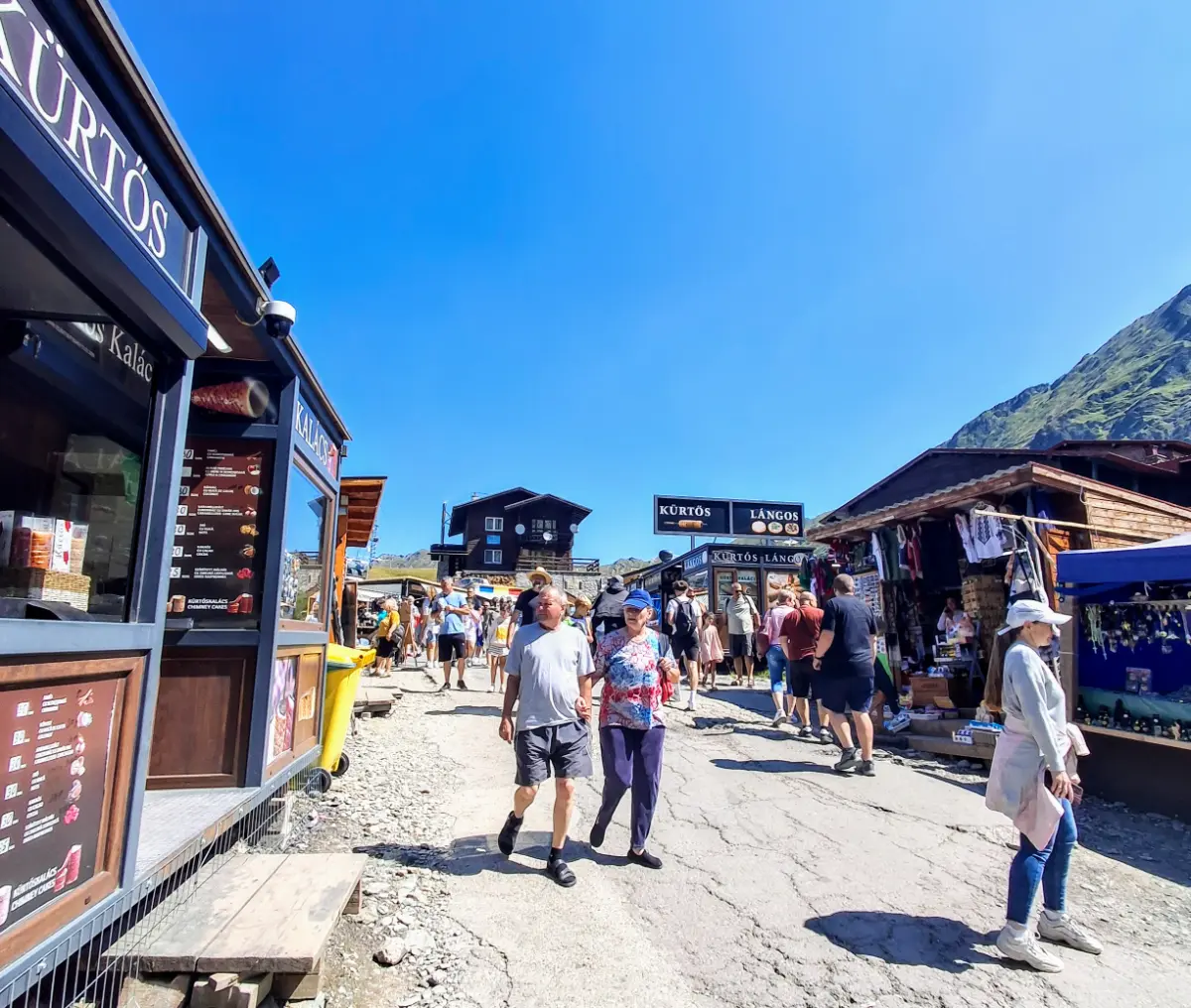
I learned after the fact that you can actually drive right up to the edge of Bâlea Lake, but it isn’t obvious when you arrive. The road becomes heavily flanked by souvenir stalls, artisan food vendors, and pedestrians wandering across the tarmac. The most instinctive move is to pull into the first open space you see and walk the rest of the way.
Leaving the car in the main paid parking lot (10 lei per hour) turned out to be a great decision. It gave me a chance to wander past the traditional food stalls, creating a wonderful sense of anticipation before rounding the corner to see the stunning glacial lake resting at the highest point of the mountain pass.
Bâlea Lake was my designated major stop for the day. I stopped for a lunch break at Cabana Paltinu, one of the lakeside cabin restaurants, where I ordered what must have been the largest single serving of tiramisu I have ever seen—easily enough for four people! Since I had eaten an incredibly hearty breakfast of fresh bread, traditional cârnați (dried garlic sausages), and fresh fruit back in Sibiu, a decadent, sweet lunch hit the spot.
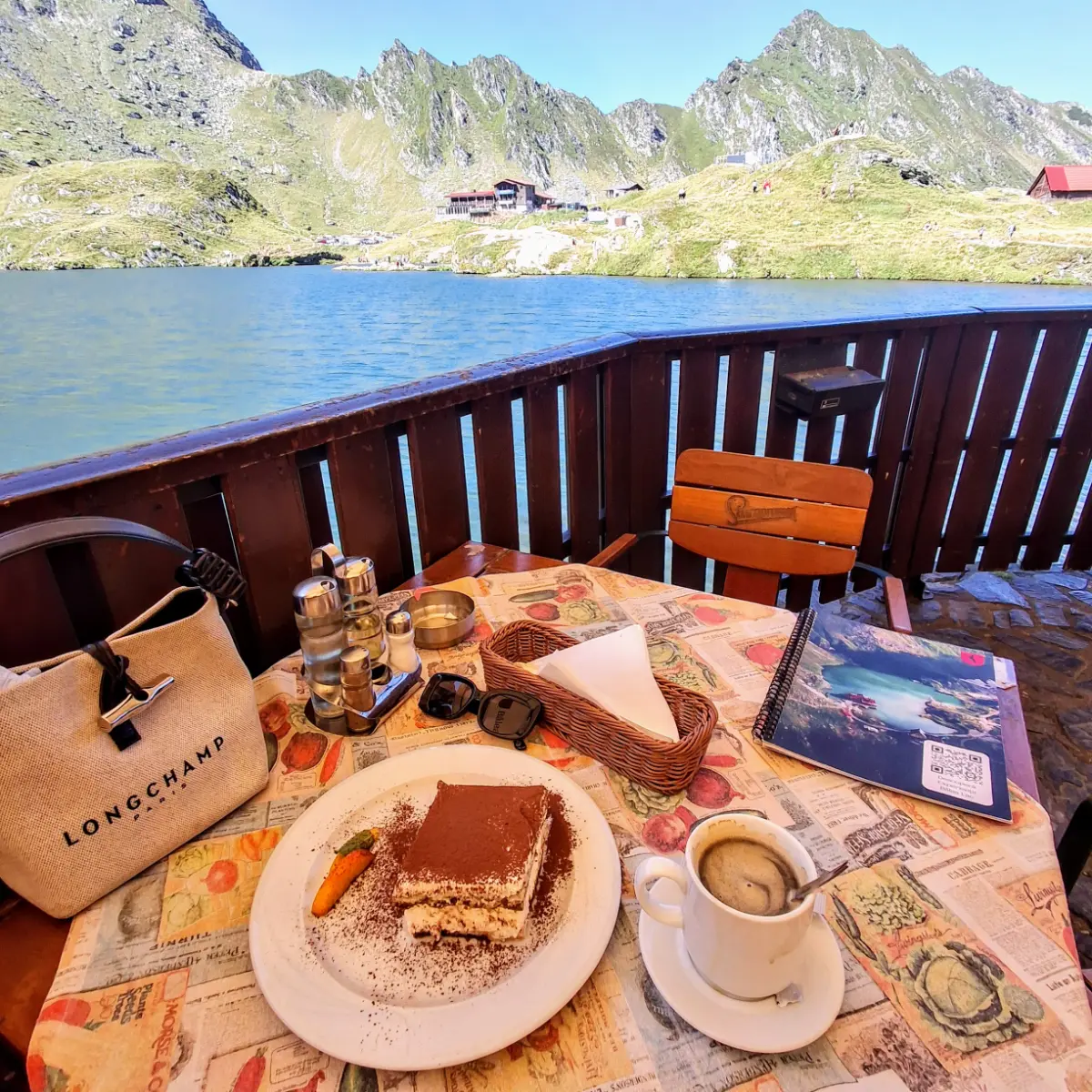
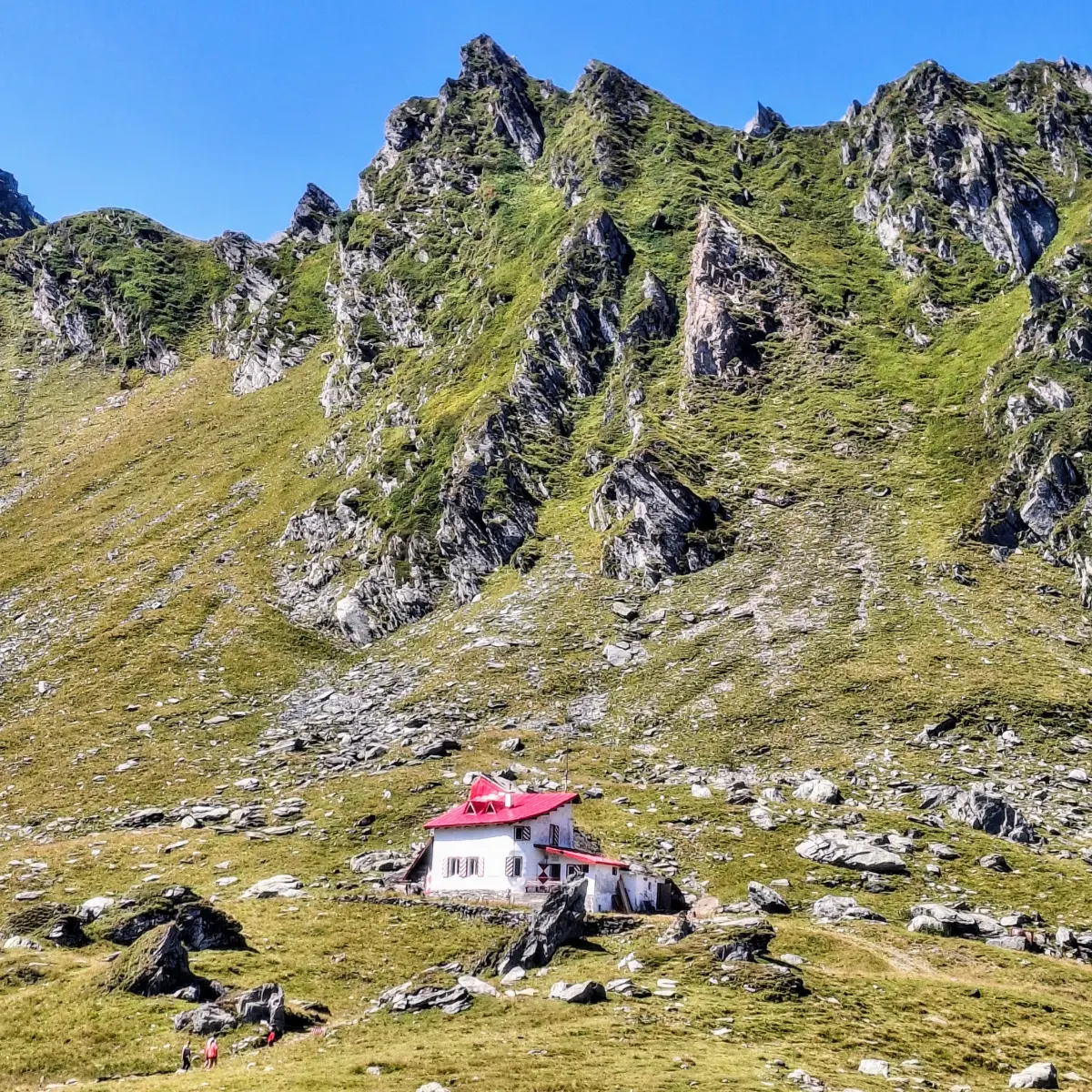
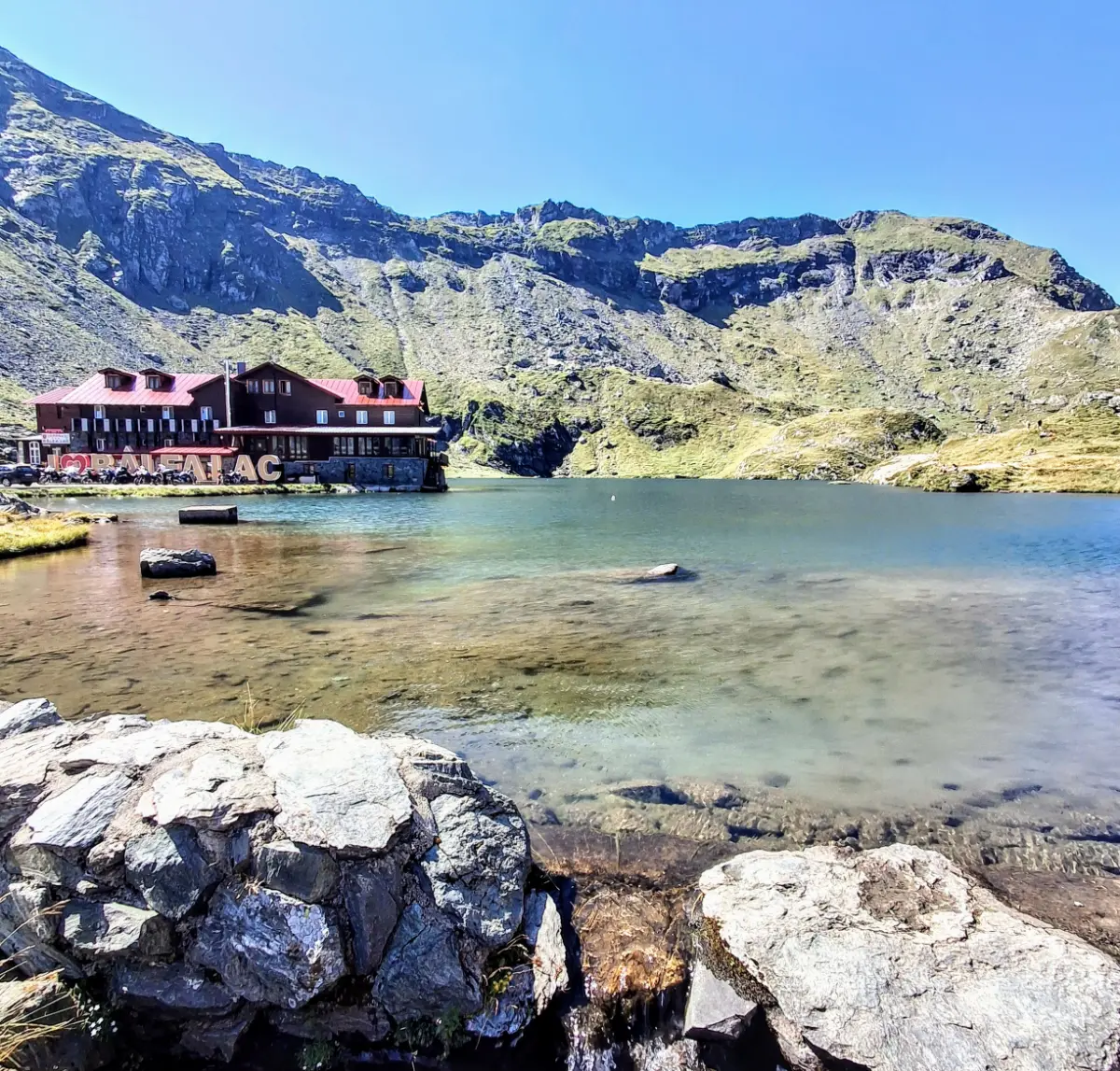
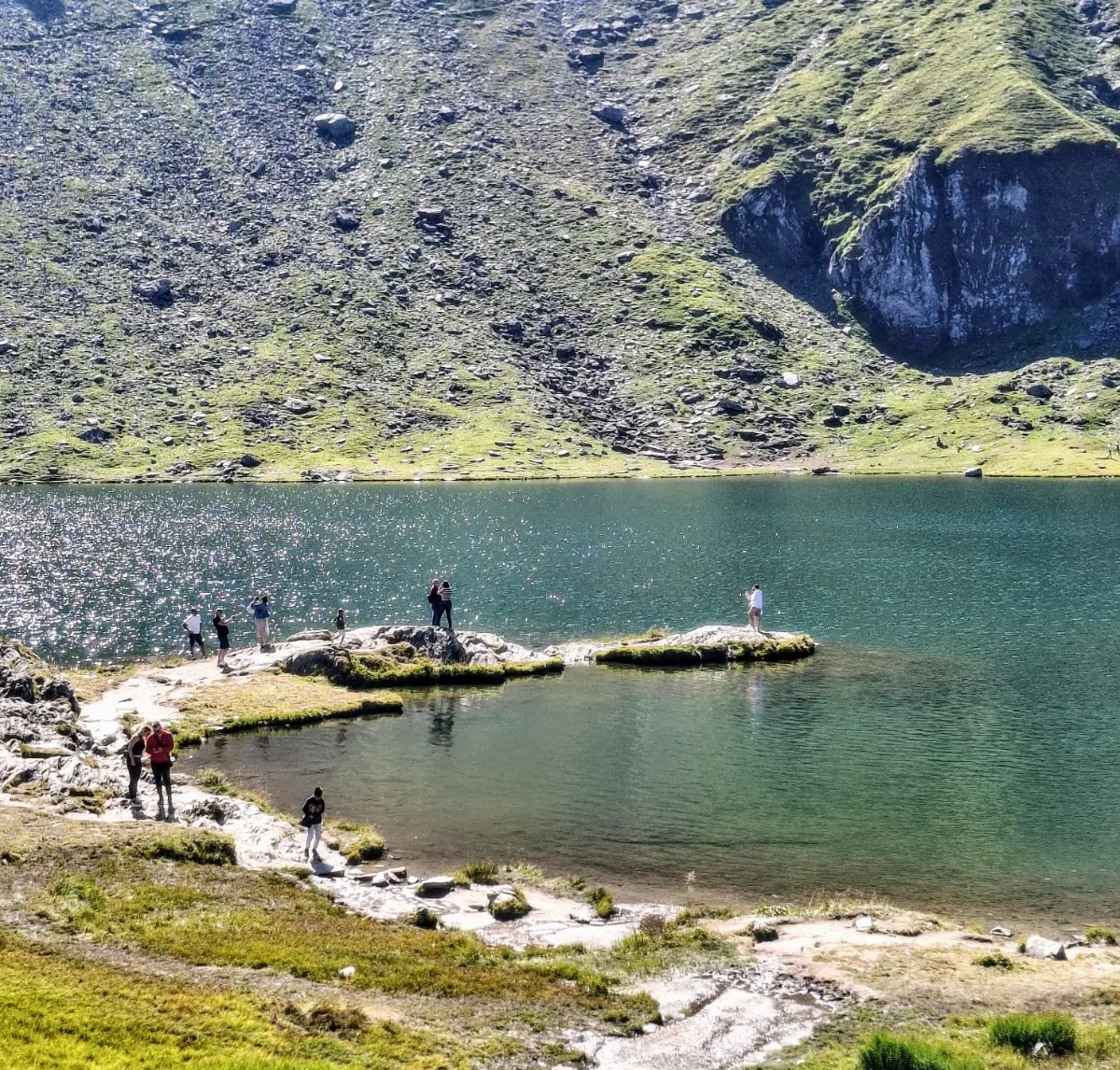
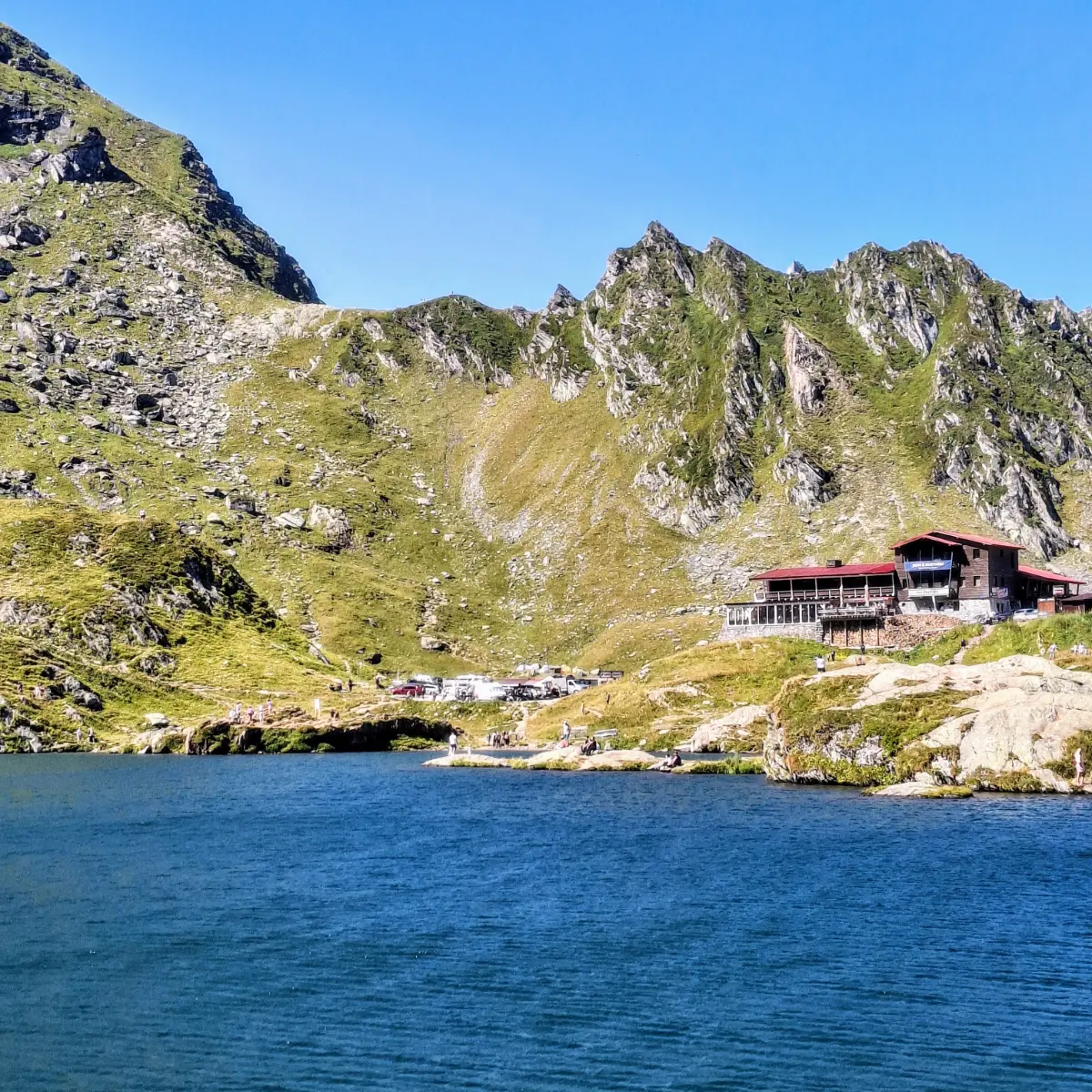
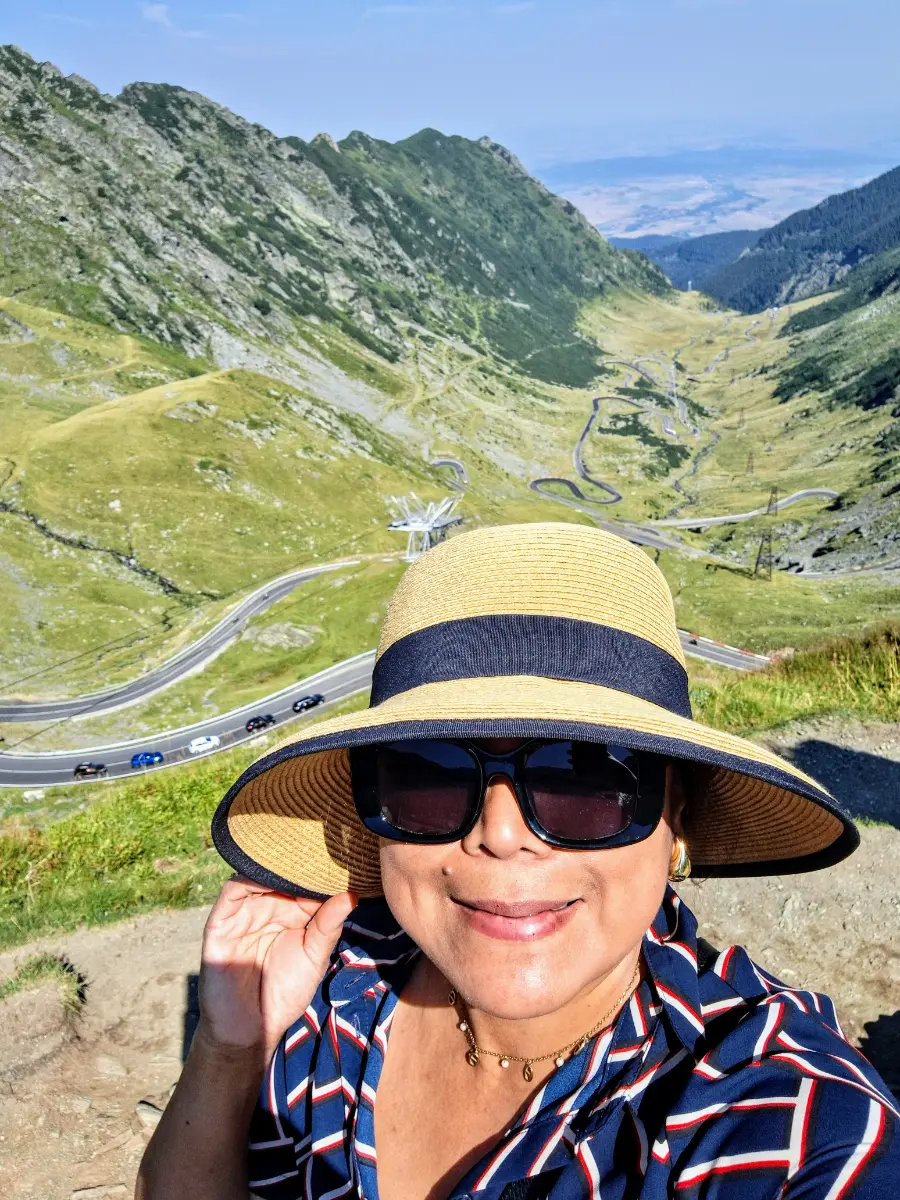
I sat out on the outdoor terrace, lingering over the meal and absorbing the pristine views of the alpine water. Afterwards, I joined the crowds taking a casual walk around the perimeter of the lake before making the short hike up the overlooking ridge. This ridge is the exact spot to capture the definitive photo of the Transfagarasan’s famous hairpin curves snaking through the valley below.
If you have more time or decide to stay overnight, you can catch the cable car down to the waterfall from here or head out on several major hiking trails. However, a word of caution: this region is home to a massive population of wild brown bears. Take serious safety precautions before attempting any trail, and never hike alone.
📊 Bâlea Lake: Fast Facts
- Formation: A natural glacial lake formed in a mountain cirque.
- Winter Metamorphosis: Every winter, blocks of ice are carved directly from the lake to construct Romania’s famous Hotel of Ice, complete with an ice church and restaurant.
- Dimensions: Spans over 4.6 hectares with a maximum depth of around 11 meters (36 feet).
Stop 4: Capra Tunnel, Capra Waterfall, and Roadside Bears
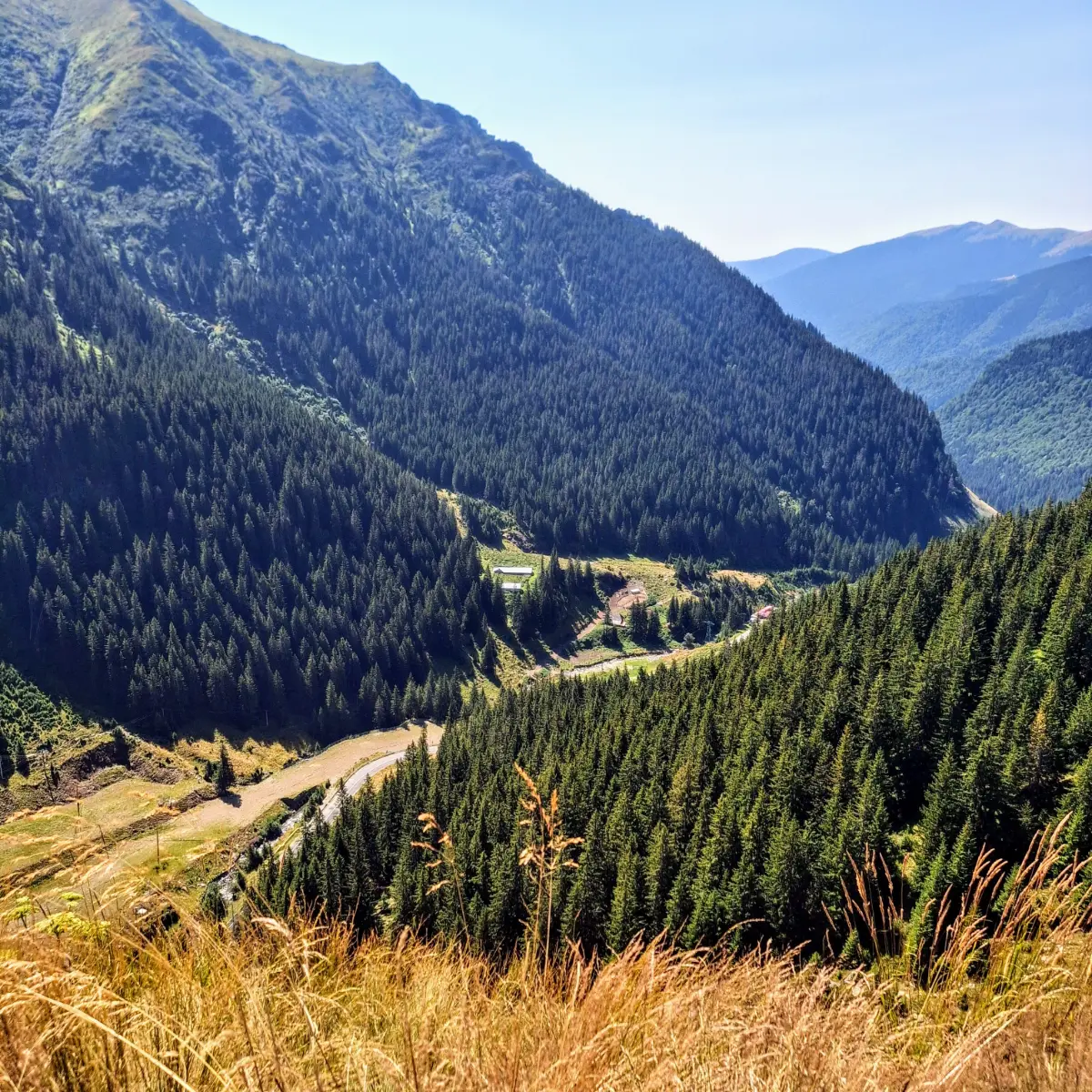
Directly after Bâlea Lake, you pass through the dark, rugged Capra Tunnel. Emerging on the southern side, the highway begins a gradual descent into lush, emerald-green alpine mountains. Off to the left, Capra Waterfall comes into view, accompanied by several dedicated parking pullouts.
Because I visited in August, the waterfall was reduced to a gentle trickle rather than a roaring torrent, but it was beautiful nonetheless. A few local craft and snack stalls line the roadside here, making it a pleasant spot to pause. I didn’t stay long—just enough to step out of the car, take a deep breath of mountain air, and admire the sweeping green valleys.
📊 Capra Tunnel & Waterfall: Fast Facts
- The Tunnel: At 887 meters (2,910 feet) long, the Bâlea-Capra Tunnel is the longest road tunnel in Romania, cutting straight through the highest ridge of the Făgăraș Mountains.
- The Waterfall: Also known as the Iezer Waterfall, it drops 40 meters down the rocky mountain face and is fed directly by the glacial Capra Lake above.
The Roadside Bears of Romania
As you continue driving south from the waterfall, you enter prime wildlife territory. This is where you are highly likely to encounter wild European brown bears sitting right on the asphalt or hanging around the road shoulders.
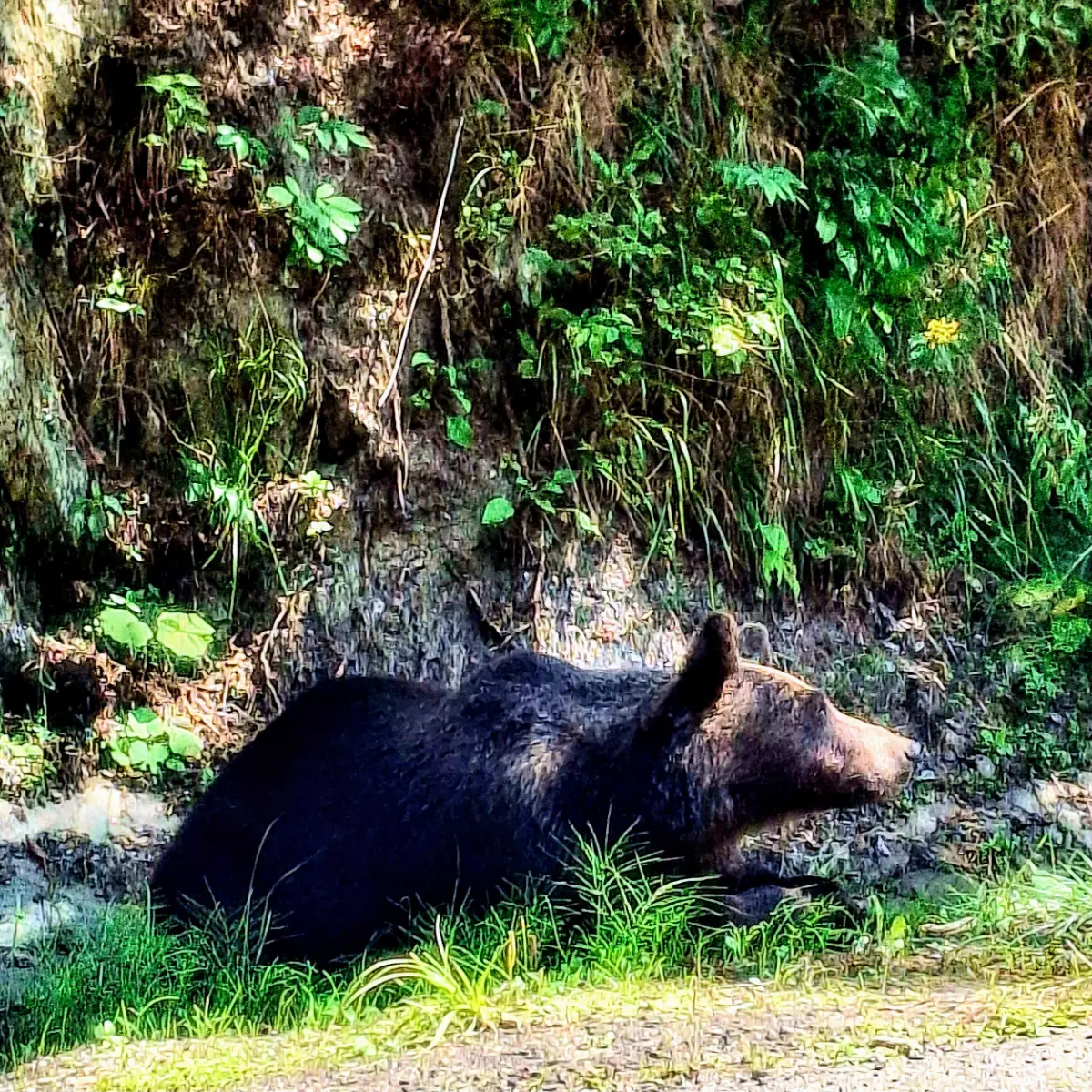
Never, under any circumstances, get out of your vehicle or approach a bear for a photo. A few reckless tourists have ignored this rule in the past with tragic, fatal results. If you spot a mother bear with cubs, exercise extreme caution; they are fiercely protective and unpredictable. Keep your windows rolled up and stay inside your car if you slow down to observe them.
It is also strictly illegal to feed them. The Romanian government implements heavy fines ranging from 10,000 to 30,000 lei (€2,000 to €6,000) for anyone caught feeding wild animals. The government increased these penalties from minor fines to strict economic deterrents for a vital ecological reason: habituation.
When humans toss food from car windows, bears quickly learn to associate vehicles with an easy meal. This strips away their natural foraging instincts and turns apex predators into roadside beggars. Habituated bears lose their healthy fear of humans, leading them to venture deeper into campsites, towns, and roads. This drastically increases human-wildlife conflicts, resulting in vehicle accidents, property destruction, and dangerous encounters that usually end with the bear having to be euthanized.
During my drive from Capra Tunnel down to Vidraru Dam, I witnessed a staggering six wild brown bears on separate occasions. Seeing these massive, powerful animals roaming completely free just inches from traffic is an utterly surreal experience. I previously visited the Libearty Bear Sanctuary in Zărnești, but those were rescued animals living out their lives in captivity. The bears on the Transfagarasan are completely wild.
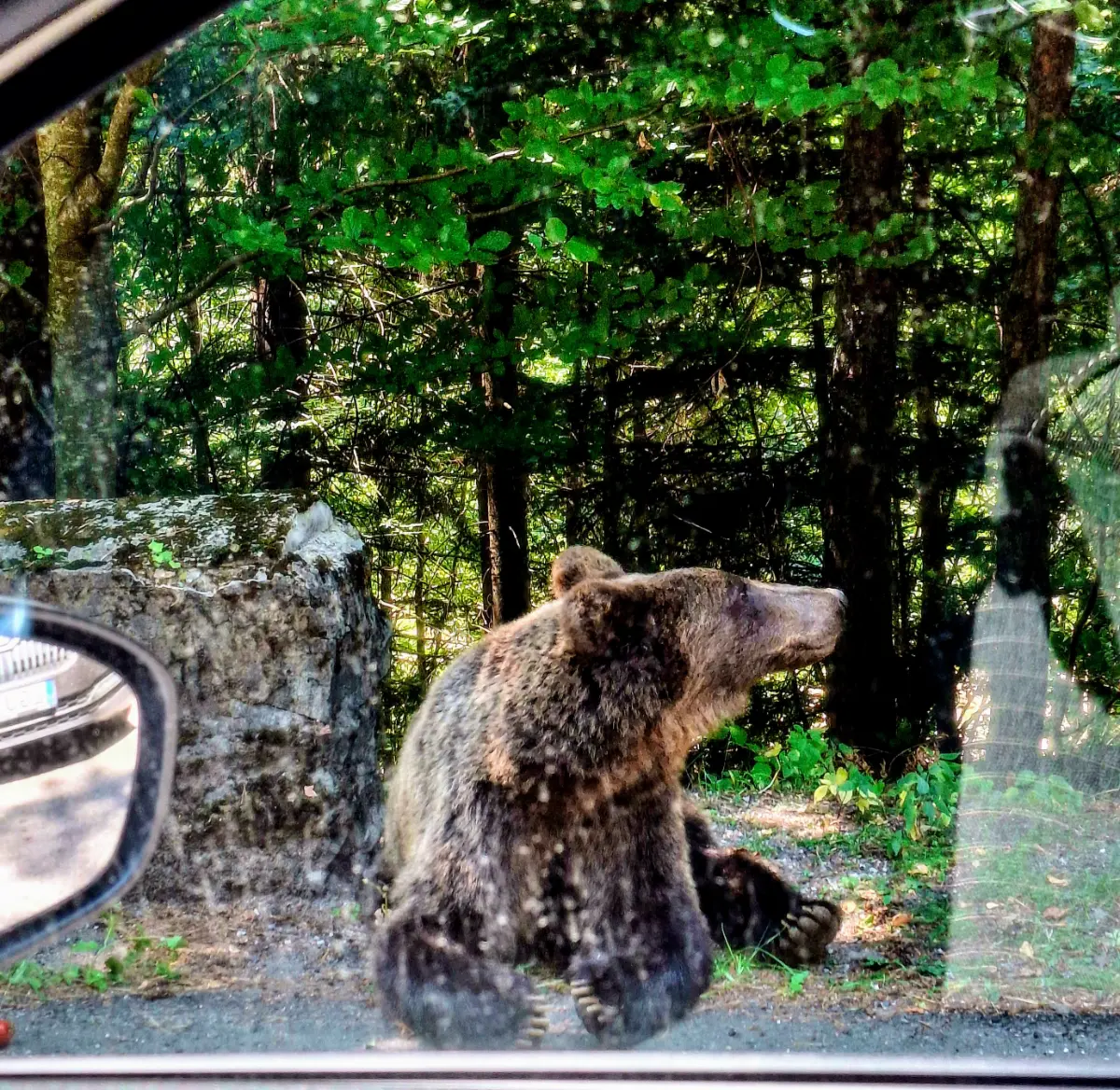
Almost every driver slowed to a crawl to get a look. Some bears strolled calmly along the guardrails, while others simply lounged on the grass, watching the traffic pass by with a bored expression. I got the distinct impression they were entirely used to the attention, waiting around on the off-chance that a driver might break the law and throw them a snack.
Seeing six bears in a single afternoon is an incredible count! I knew the highway was famous for wildlife sightings and hoped I might catch a glimpse of just one—but six was a true jackpot. It really highlights the scale of the wild bear population challenge Romania faces within its mountain corridors.
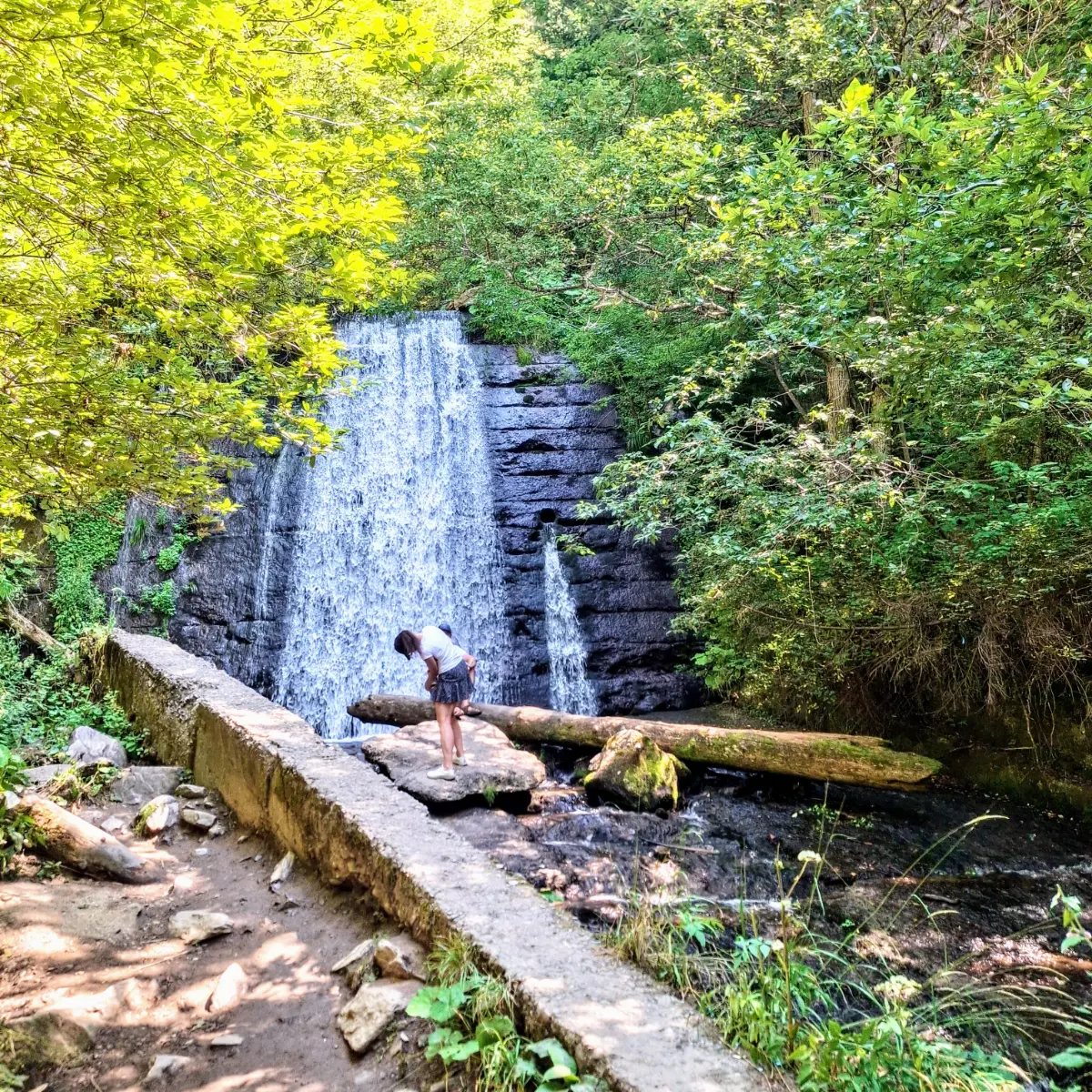
Shortly before reaching the dam, I spotted a beautiful, hidden waterfall tucked into the trees and made a brief roadside stop. It was a lovely, quiet spot, but with the thought of six wild bears fresh in my mind, I kept my guard up, took a quick photo, and didn’t linger long before jumping back into the car.
Stop 5: Vidraru Dam & Lake Vidraru
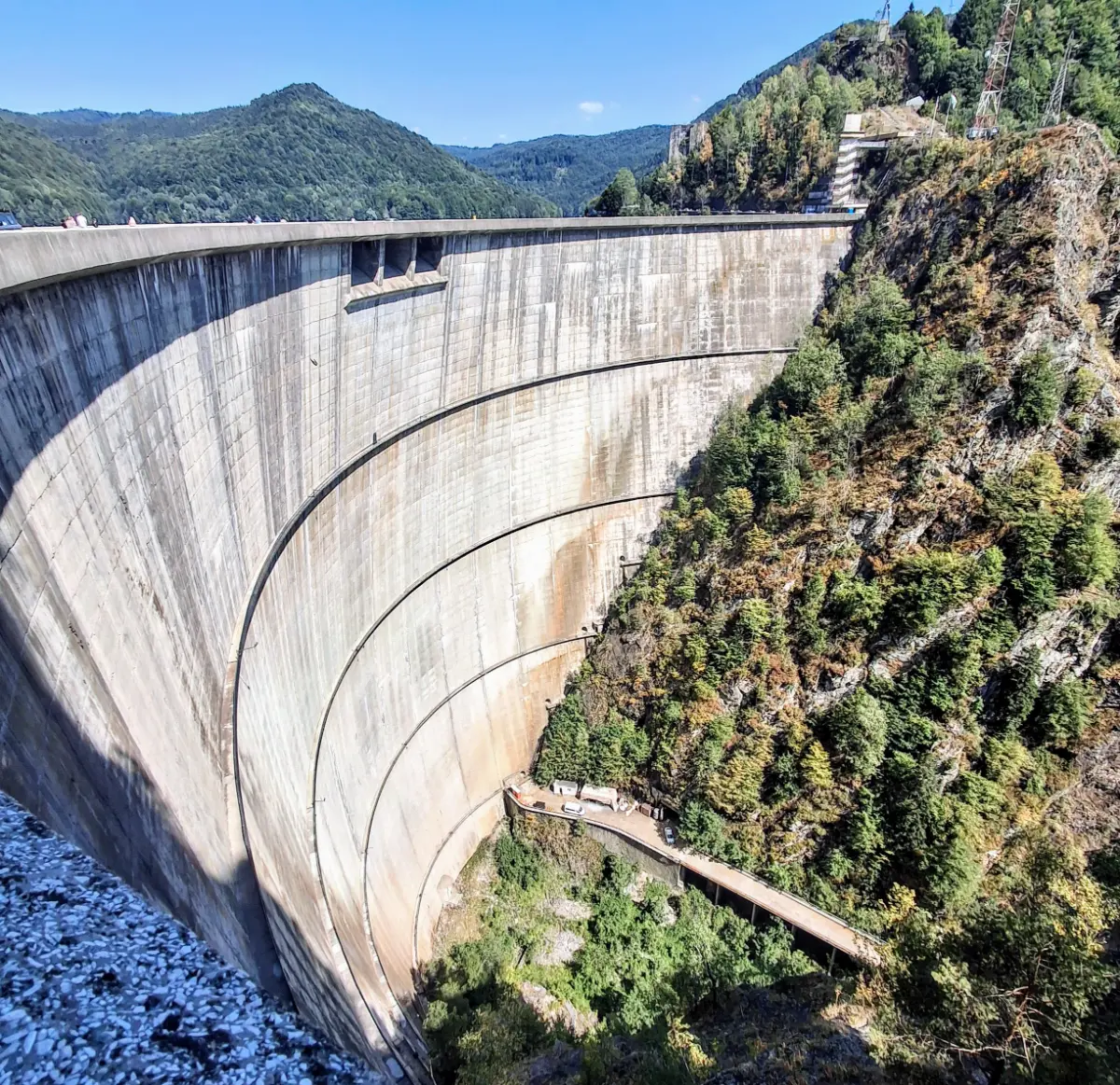
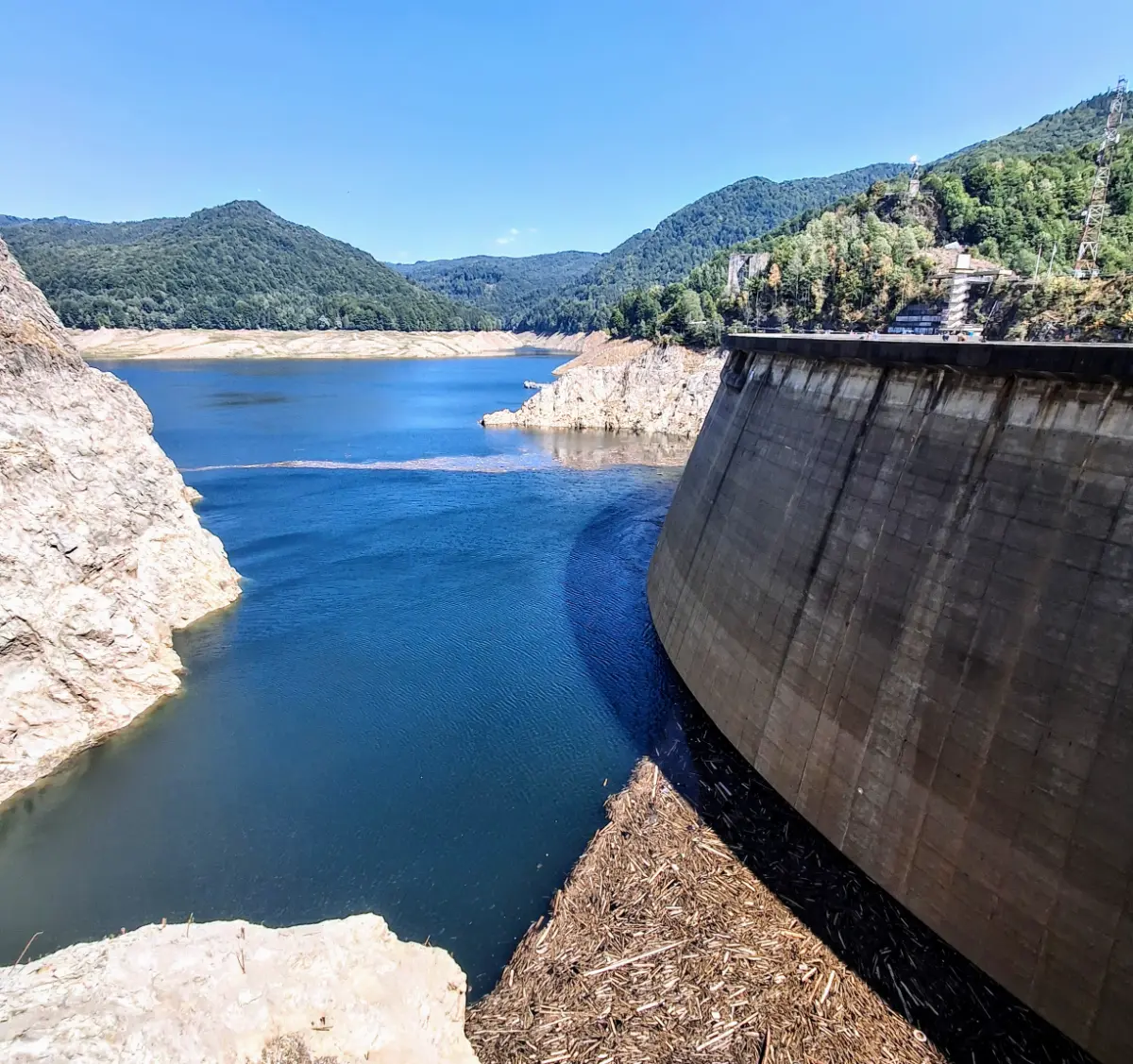
As the highway dropped lower into the southern valley toward Vidraru Dam, the bear sightings finally came to an end. However, the open road quickly disappeared as traffic began to back up into a dense bottleneck just before reaching the edge of the massive concrete wall.
Souvenir stalls and traditional food vendors lined the roadside, making the entire area feel incredibly busy. I managed to lock down a parking space immediately after crossing the dam just before entering the next tunnel. It is a wildly popular area, so you have to be alert and lucky to snag a spot.
There are panoramic viewing platforms built around the reservoir, and while I didn’t plan on a long stay, I walked out toward the center of the dam’s crest to admire its immense expanse. The reservoir water was perfectly still, showcasing a deep, gorgeous turquoise hue. Both sides of the pass were bustling with people and cars; tourists flock here not just to admire the mid-century engineering, but to relax and grab a bite at the busy roadside cafés and street food stalls.
📊 Vidraru Dam & Lake Vidraru: Fast Facts
- Scale & Engineering: Completed in 1966, the dam stands an impressive 166 meters (544 feet) tall, making it one of the largest arch dams in Europe.
- The Reservoir: Lake Vidraru spans over 10 kilometers in length and holds nearly 470 million cubic meters of water, fed by the Argeș River and its tributaries.
- The Monument: A giant, towering iron statue of Prometheus (The Electricity Monument) overlooks the dam, commemorating the workers who built it.
Stop 6: The Shadows of Poenari Castle
Continuing down toward the historic town of Curtea de Argeș, you pass a legendary spot for Dracula fans: Poenari Castle (Poenari Fortress). Perched high on a cliffside, this is the authentic, real-life stronghold of Vlad the Impaler (Vlad Țepeș).
Visiting it requires a physically punishing climb of over 1,480 concrete steps weaving steeply through the dense forest. Given how late in the afternoon it was getting, making the trek up was out of the question for me. I did stop around the curve by the roadside restaurant but it was quite difficult to catch a clear glimpse of the ruins from the road below due to the lush vegetation, so I kept my momentum and drove right on.
📊 Poenari Castle: Fast Facts
- The Real Deal: Unlike the heavily commercialized Bran Castle, Poenari is the actual, historically documented mountain fortress heavily fortified and lived in by Vlad III.
- The Cliffside Legend: According to historical accounts and folklore, during a 15th-century Ottoman siege, Vlad’s first wife tragically plunged from the castle walls into the rushing Argeș River far below.
- Restoration Update: The citadel completely wrapped up a multi-year, EU-funded comprehensive conservation project to preserve its historic masonry and stabilize the mountain access.
Stop 7: Navigating Curtea de Argeș
My original itinerary called for a major cultural stop at the famous Curtea de Argeș Cathedral and the adjacent Argeș Monastery. Unfortunately, the monastery was completely closed for extensive renovations. To make matters trickier, I tried tracking down an alternate route to access the cathedral, but local road closures had the streets blocked off, sending me around in literal circles.
By this point, it was nearing 17:00. Commuters were pouring out onto the streets heading home, and heavy end-of-day traffic was rapidly building up. I decided to ditch the plan and keep moving south. I wanted a restful break incredibly badly—somewhere low-key where I could just sit down with a cold drink.
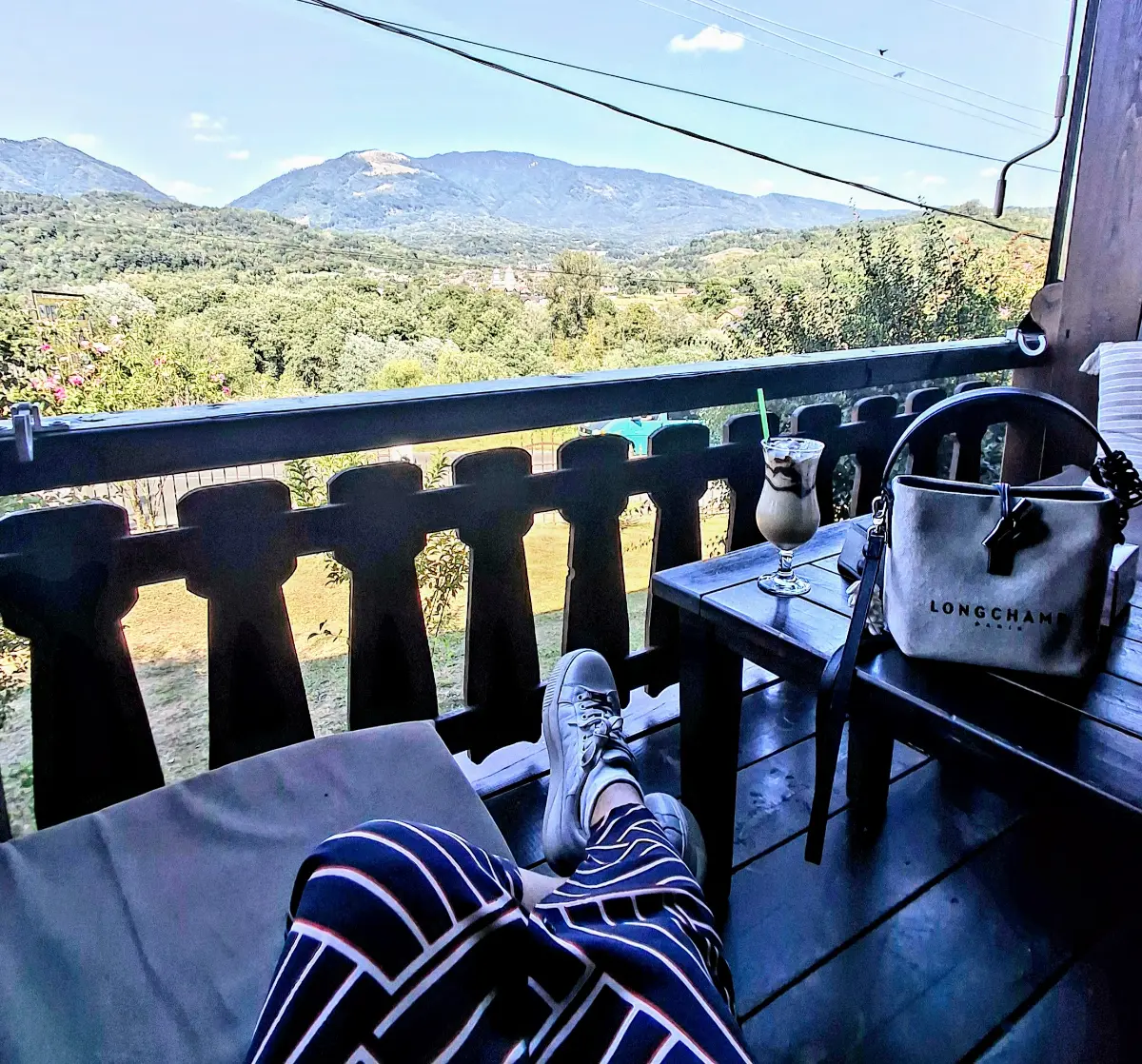
I had previously bookmarked two highly rated café-restaurants on Google Maps, but as I cruised past them, the chaotic vibes just didn’t feel right for a relaxing pitstop. Then, I spotted a charming, quiet roadside Bed & Breakfast with an attached restaurant. It was exactly what I wanted. I took a seat out on the peaceful outdoor terrace, reflecting on the legendary mountain pass I had just conquered, while mapping out my dinner plans. Amazingly, I had the entire patio completely to myself!
📊 Curtea de Argeș Cathedral & Monastery: Fast Facts
- The Royal Necropolis: The historic cathedral serves as the final resting place for Romania’s royal family, housing the tombs of King Carol I, Queen Elisabeta, King Ferdinand, and King Michael I.
- Architectural Revolution: Built in 1512-1517, it features a unique, hybrid Byzantine layout adorned with intricate Moorish, Armenian, and Georgian geometric arabesques.
- The Legend of Master Manole: Local folklore says the lead architect, Manole, had to wall his own wife alive into the masonry to stop the structure from mysteriously collapsing every night during construction.
Stop 8: Dinner at Argeș Mall in Pitești
Solo driving the transfagarasan highway across mountain passes can be incredibly taxing. By the time I pulled away from the café, I had been traveling for nearly 10 hours, with a solid two hours of highway driving still remaining to reach Bucharest. Wanting nothing more than to check in and crash at my apartment upon arrival, I decided to take a practical dinner break halfway at the Argeș Mall in Pitești.
Dinner itself was nothing glamorous—just a quick, satisfying plate of noodles and fried chicken in the food court. Like many European countries, Romania has embraced these massive, ultra-modern suburban shopping centers. Located conveniently right outside the dense city centers, they offer massive parking footprints and serve as all-in-one hubs for shopping, dining, cinemas, and entertainment.
I finally rolled into Bucharest just before 20:00. The timing worked out beautifully because street parking around my apartment drops to free right after 8:00 PM. Scoping out an open, free parking space in the heart of Bucharest is notoriously difficult, but if you have a little patience, things eventually open up.
I held onto the keys with plans to drop the vehicle off the following morning. I had back-and-forth debates on whether I should rush to return it that evening, but tracking a hard arrival time down from the mountains is impossible. Returning a rental car after corporate business hours not only triggers extra hidden fees, but requires a lot of annoying logistical phone calls. To keep things entirely stress-free, keeping the car overnight and returning it fresh the next day was the smartest play.
🗺️ Catch Up on the 8-Spoke Road Trip Series!
The Transfagarasan Highway was the grand finale of my regional tour. If you missed any of my previous drives, check out the first seven spokes of the journey below before my ultimate trip directory drops very soon:
- Spoke 1: Royal Elegance in Sinaia – Exploring the stunning Peleș Castle
- Spoke 2: The Fortress Vibe of Brașov – Two days soaking in historic charm
- Spoke 3: Day Trips from Brasov – Exploring Rasnov, Bran, and the Libearty Bear Sanctuary
- Spoke 4: Saxon Heritage in Viscri – A step back in time
- Spoke 5: Picturesque Sighișoara – A night in the Citadel Sphere
- Spoke 6: Grandeur and Mystery in Sibiu – The historic heart of Transylvania
- Spoke 7: Day Trips from Sibiu – Corvin Castle and Alba Iulia Citadel
- Spoke 8: Bears and Driving Transfagarasan Highway – Epic Transfagarasan highway drive from Sibiu to Bucharest (this post!)
Stay Tuned: In a week or two, I am releasing the Ultimate Master Hub Guide, compiling all 8 of these epic routes into a seamless, comprehensive master itinerary.
Happy Travels!
With love from Jo
Travel Period: August 2026
Transfagarasan Highway, northern slope (Sibiu county, Transylvania), Romania
Transfagarasan Highway, southern slope (Arges county, Wallachia), Romania
Those hairpin turns look incredible, and a little nerve-racking! Tiramisu by Bâlea Lake sounds like a pretty good excuse to take a long break. Keeping the car until morning was a smart call after a day like that.